
- Capture schematic manufacturing documentation
- Automate system information such as schematic designs and virtual prototypes
- Determine the quickest path for manufacturing, cost, and serviceability
- Ensure design rules and schematic logic rules are enforced through specification-driven design
- Re-use standard symbols, connectors, and fittings in customizable library
- Eliminate the need for physical prototypes with virtual interference checking and automated manufacturability verification
- Enable cost-effective manufacturing through accurate documentation, such as isometric drawings, bend tables, and BOMs
Now more than ever, product design and manufacturing teams are expected to create efficient, cost-effective products, without sacrificing innovation or quality.
That’s why so many organizations use the 3D CAD software known as PTC Creo Parametric to accelerate the design of parts and assemblies. Working with many product development organizations, we know that not every product is made equal.
The purpose this EAC Creo Clip is to show PTC Creo users, like you, functionality and capabilities you might not know about. Short clips, useful features, better designs – It’s that simple.
Fortunately, Creo delivers the most scalable range of 3D CAD product development packages and tools in today’s market.
In this Creo clip, we talk about how to check design interferences with Creo Parametric 5.0. We talk about how you may be able to skip the full interference check if you are looking to do a very quick analysis for interferences in specific areas of your models. Learn why, in some situations, the sectioning tool might be the best option.
Why are we talking about finding interferences with Creo’s sectioning tool? Most people are familiar with finding interferences in their models by using global interference checks, which is a great tool. Unfortunately, with larger models, it can take some time to run and it might not pinpoint the interferences that you are looking for.
Watch this short EAC Creo Clip that demonstrates how to find interferences in models using the Creo Parametric sectioning tool.
PTC Creo Simulate gives design engineers early insight into product behavior to significantly improve product quality, decrease rework, and save money with fewer iterations in the design process.
Virnig Manufacturing needed to maintain a high level of quality in their skid steer loader attachments and was looking to increase operational efficiency and customer satisfaction. Darin Virnig and his team use PTC Creo Simulate to reduce costs, decrease weight, and eliminate reliance on physical prototypes – ultimately reducing design time by twenty-five percent.
Check out how Virnig Manufacturing uses PTC Creo Simulate to change the way they innovate in early design stages.
Business Initiatives
When it comes to skid steer attachments, it doesn’t get better than Virnig. Located in the heart of Central Minnesota, Virnig Manufacturing has been designing and producing skid steer loader attachments for over 27 years.
However massive they may seem now, Virnig wasn’t always the manufacturer we know today. When Dean and Lois Virnig got their start in 1989, the business operated out of a two-stall garage repairing farm and construction equipment. After five short years, the company discovered its niche – creating skid loader attachments.
Today, all steps of the manufacturing process are completed in-house. From engineering and cutting raw materials, to machining, welding, and painting the finished product, every attachment is designed and produced at Virnig’s facility.
Virnig now carries over 40,000 attachment parts and offers more than 80 unique skid loader attachments. Headquartered in Rice, MN, Virnig’s 67 employees have over 400 years of combined industry experience. The family owned and operated business has grown into a premium skid steer attachment manufacturer supplying North America and beyond.
Business Challenges
Virnig has been challenged more than ever to produce high quality, lightweight attachments in order to outperform the competition.
Darin Virnig, Manager of Production and Engineering explained, “We try as a company to get repeat business and to demonstrate to our customers that we have a solution for their problems. As our products continued to get more complex, they became heavy and overbuilt compared to our competitors. We knew we needed to lighten the machinery parts to reduce cost. As a company, we had to look to practices that gave us confidence in our processes before jumping into prototyping.”
Darin knew his team needed to maintain a high level of quality and also saw an opportunity to increase operational efficiency and customer satisfaction. To deliver on this goal, Virnig needed to provide employees across the organization with an in-depth view of how designs performed in real-world conditions.
This understanding would help Virnig reduce or eliminate product related issues in the field, lighten machinery parts, and reduce costly prototyping. By virtually testing real-world conditions, Virnig could maintain high-quality standards while optimizing and adjusting to their product lines.
Solutions – PTC Creo Simulate
Eager to reduce costs, decrease weight, and eliminate reliance on physical prototypes, Darin and his team turned to a PTC product called Creo Simulate. Because the engineers had used PTC Creo (formerly known as Pro/ENGINEER) as their primary CAD tool for several years, they felt it was only logical to turn to PTC’s Creo Simulate.
Creo Simulate is designed to provide users with accurate design simulation capabilities right within their CAD platform. By using the software’s simulation tools to create virtual prototypes, users are able to visualize and test a product’s structural performance before cutting any steel. This saves Virnig’s engineers time, energy, and money as they are designing new products.
Prior to implementing simulation software, Virnig tested product designs using trial and error or the build-and-break method. As products became more complex, the team realized the importance of accurate structural analysis. Virnig’s engineers found PTC’s integrated simulation tool easy to design, analyze and optimize the attachment lines.
Improving engineering design standards with early simulation
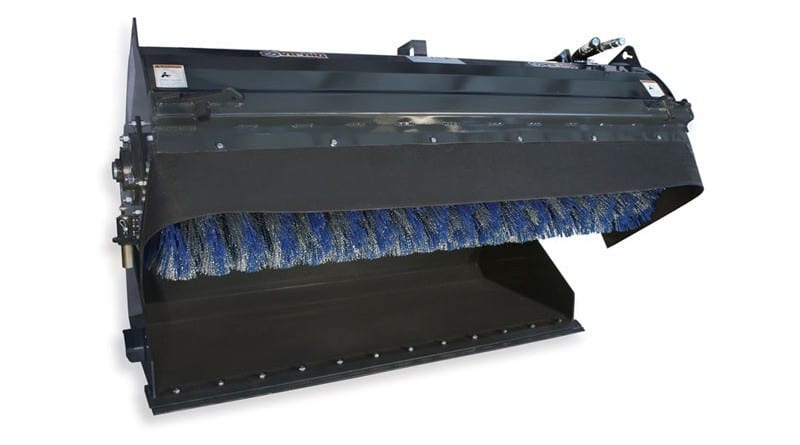
Virnig used Creo Simulate to innovate their most popular product, the Pick-up Broom. Traditionally the product consisted of a top with hydraulically driven bristles engineered to propel dirt into the bucket located on the bottom. With the Pick-up Broom, in particular, Virnig faced challenges as they attempted to lighten the machinery parts. To effectively analyze the deflection and strength of the product components, Virnig needed to test several design variations.
Using Creo Simulate, the team was able to virtually test multiple product designs in real-world conditions. At the touch of a finger, Virnig identified overbuilt areas on the Pick-up Broom. Their findings directly translated into lowered manufacturing costs, and lighter weight products that adhered to quality and manufacturing standards.

With the help of Creo Simulate, Virnig was able to reduce the Pick-up Broom cost by 5% without compromising quality. Creo Simulate also allowed Virnig to save 10% on labor and assembly time throughout the product development process by eliminating most of the expensive and time-consuming prototype manufacturing.
Darin explained, “We were able to resolve the problems we had with field issues as we got more comfortable with the software. We saw it replicate places that had problems showing us the high-stress areas and factors.”
The benefits didn’t just stop there. This PTC simulation software allowed Virnig to use analysis early and often to verify and optimize the attachment product’s design integrity, function, performance, and cost. On average the company saved 25% on design time.
Darin stated, “We were able to finish the product faster, especially the structural parts that we manufacture by cutting and molding. Simulate on average has provided us a time savings of at least 25% because we don’t have to do as much trial and error on testing and prototyping.” Today, Virnig saves an average of 5 hours on every product they manufacture.
Darin explains what he considers the real value of Creo Simulate, “We have saved material, labor, and product while being confident that our quality hasn’t been compromised. Creo Simulate is saving us money and putting us at a competitive advantage – there is no doubt about that.”
By integrating the latest product development technologies and using top-of-the-line materials, Virnig continues to be a leader in the skid steer attachment industry.
Learn more about PTC Creo Simulate or contact us.
PTC has a Creo Parametric Extension called the Piping and Cabling Creo Extension (PCX) that allows engineers and designers to create piping and cabling systems easily throughout the design process. You can work in a 2D schematic or 3D modeling environment to automate the creation of manufacturing documentation.
Starting with a 2D schematic, designers can quickly review wiring routes and connections to avoid errors. If a new wire is needed, this can easily be added in a 2D environment by selecting from a library of standards and creating the connection.
Wiring cabling and piping diagrams in XML formats are supported in the PCX extension and can integrate with PTC Windchill. PCX automatically identifies errors in missing connectors and will prompt you to fix the problem so you can continue routing. Designs are ensured with constant visual feedback to decrease geometry interferences and increase the quality of the end routing design.
Benefits of Creo Piping and Cabling Extension
Watch this webinar replay to see how design documentation is maintained throughout the design process when using PCX extension.
On November 20, 2018, PTC announced the ~$70M acquisition of an advanced generative design software company named Frustum Inc. Frustum’s technology leverages artificial intelligence (AI) to generate design options in a process called “generative design.” It will be worth your time to follow this acquisition and how PTC incorporates the technology into their flagship offerings. It should be a transformative addition to PTC’s Creo portfolio.
Frustum offers patented desktop and cloud-based engineering software from their headquarters in Boulder, CO. Their software enables engineers and designers to go beyond the limits of their personal experience by leveraging powerful AI capabilities that guide the discovery of high-performance, next-generation product designs.
When asked about the acquisition, Jim Heppelmann, President and CEO of PTC said “PTC is pushing the boundaries of innovation with this acquisition…Creo is core to PTC’s overall strategy, and the embedded capabilities from ANSYS and, later, Frustum will elevate Creo to a leading position in the world of design and simulation. With breakthrough new technologies such as AR/VR, high-performance computing, IoT, AI, and additive manufacturing entering the picture, the CAD industry is going through a renaissance period, and PTC is committed to leading the way.”
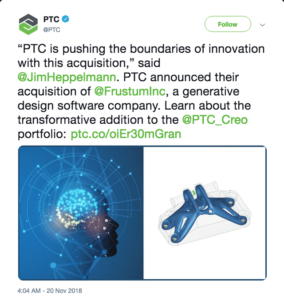
Earlier this year PTC announced a strategic relationship with ANSYS. Frustum complements this relationship and will help bring analysis upstream to the very start of the design process. With embedded Frustum and ANSYS capabilities, Creo will be able to recommend design approaches using generative design, guide the user through the iterative design process using ANSYS Discovery Live, and ultimately validate the full product design at scale using the broader ANSYS Discovery suite. With these capabilities embedded in Creo, engineers will have unmatched capabilities to rapidly drive product innovation.
Here is some more information about the acquisition from the official PTC press release…
“This acquisition is a natural step for PTC and its customers,” said Jeff Hojlo, program director, product innovation, IDC. “AI and machine learning (ML) are widely discussed as two of the most impactful technologies of the future. For design, engineering, and R&D, the potential positive impacts of complementing the development process with AI and ML are astounding: lowering cost of quality (which is currently 20-25 percent of annual revenue at the average manufacturer), improving product success rate (which remains very low with more than 80 percent of products failing), and improving time to market and time to revenue by meeting customer needs accurately the first time.”
The Power of Generative Design
With generative design, engineers can interactively specify the functional requirements and goals of their design, including preferred materials and manufacturing processes—and even indicate key design parameters that take into consideration purchasing decisions, manufacturing capacity, supply chain status, and regional-required product variances. The system then uses AI and powerful high-performance computing techniques to present design alternatives for consideration as a starting point or as a final solution. By removing the constraints of human imagination and experience, engineers will be able to interact with the technology to create superior designs and innovative products more quickly.
Generative design is appealing to PTC’s vast customer base as they seek ways to:
- Increase engineering productivity
- Improve innovation and conceptual design exploration
- Develop higher-performance designs that are lighter weight, with improved durability
- Optimize new products for improved manufacturability, reduce material costs, and decrease manufacturing cycle times
- Create complex geometries optimized for additive manufacturing
- Deliver better products faster
The Impact of Artificial Intelligence
Integral to Frustum’s technology is a powerful AI component that learns, evolves, and, ultimately, performs key tasks, including:
- Providing valuable feedback to a designer early in the design phase
- Optimizing designs for multiple objectives simultaneously and offering a designer with multiple novel design alternatives, which enables companies to substantially reduce engineering cycles
- Modifying designs to manage multiple requirements and constraints, physics, materials availability, manufacturing processes, and design objectives
- Automating testing the outcomes of the design with other enterprise insights, including costing, supply chain, and quality data
The Transaction
The transaction closed on Monday, Nov.19, 2018. The acquisition is not expected to add material revenue for 2019 or to be dilutive to the financial guidance PTC provided on Oct. 24, 2018.
Additional Resources
Forward-Looking Statements
This news release contains statements about future events, including business performance and the effect of the acquisition on our future financial results, the integration and development of solutions, and the expected value of the acquired technology to users. These statements are “forward-looking statements” and actual results may differ materially from those projected as a result of certain risks and uncertainties, including that the acquisition may not have the expected effect on future financial results and that the integration of the solutions may not occur when or as expected, and those risks and uncertainties described in PTC’s filings with U.S. Securities and Exchange Commission. These forward-looking statements reflect our beliefs as of the date of this release and we undertake no obligation to update or revise any forward-looking statement, whether as a result of new information, future events or otherwise.
Remember in 1977 when Ken Olson, the founder of Digital Equipment Corporation said, “there is no reason anyone would want a computer in their home”? Boy was he wrong. Not even a leader in the technology industry could predict how quickly our usage of technology would change.
If you don’t make an effort to keep up with the fast pace of technology; you will fall behind. It’s critical that you proactively embrace and move towards digital processes to ensure that future products better meet the needs of customers.
What better way to keep up with the future than making highly accurate product performance and behavior predictions with the right design tools?
PTC developed a Creo extension called Creo Product Insight. It lets designers and engineers incorporate the latest sensor technology into their designs.
What is Creo Product Insight?
Creo Product Insight captures and analyzes product data from live sensors on prototypes and products directly within your CAD model. This tool produces a digital twin, an exact replica of a physical prototype in a virtual CAD model, to mirror the performance of a product under real-world conditions.
How does it work? You add digital sensors from a library directly into your CAD models in Creo. Then you connect them to the data streams from physical products. Whether you’re looking to get more value out of your prototypes, design smart connected products, or use data to improve the quality of existing products, the Creo Product Insight Extension allows you to design smarter.
So how are organizations keeping up with the digital transformation with the Creo Product Insight Extension?
Improving New Product Design
When you’re improving new product design you’re most likely basing your design decision on assumptions and historical data. This puts you in a difficult spot because you may not have up-to-date-information which may cause inaccurate solutions and error-prone results.
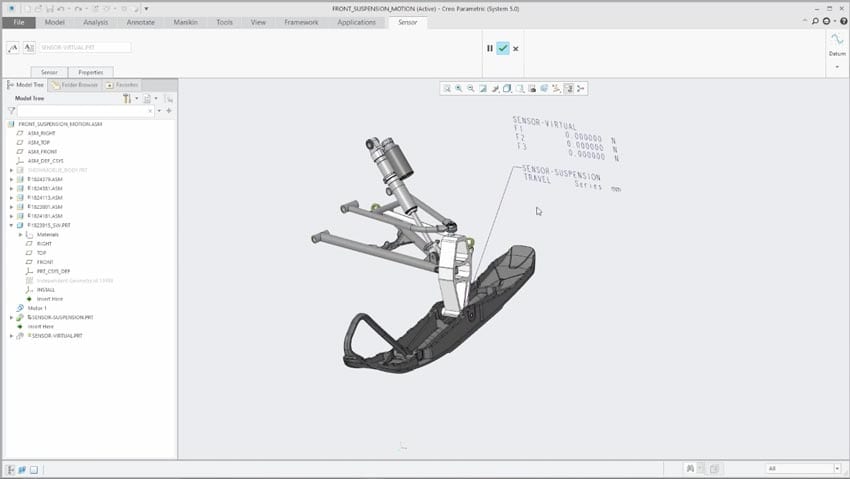
Creo Product Insight allows you to validate design assumptions using real-world data from the field directly in Creo’s simulation and analysis tools. Using this extension also decreases your reliance on building prototypes because it gives you live product performance and behavior.
Improving Existing and Next-Generation Product Designs
The absence of real-world product data stunts the optimization of current and future products. If you had access to real-world data, you would be able to validate design criteria against customer usage data and mitigate risk of product failure, warranty, repair, and liability.
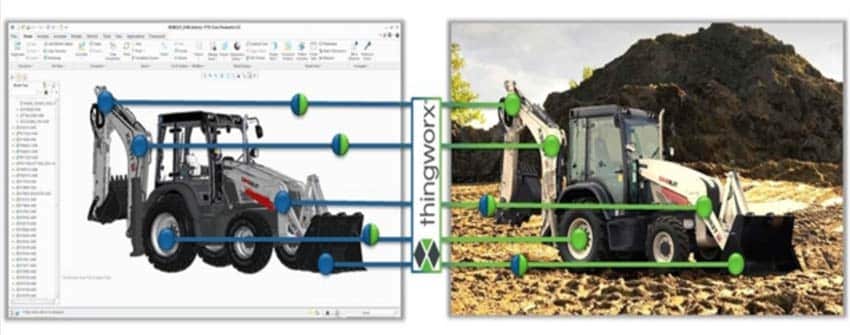
With Creo Product Insight and ThingWorx you can analyze field data and provide meaningful information back to engineering. Using real-world data allows you to identify opportunities for new products in the market and understand over and under engineered designs to reduce product life cycle costs.
Improving Smart Connected Product Design
The lack of specialized tools that support smart connected products puts you at risk of falling behind the digital transformation process. When sensors and a strategy to capture real-live data are disconnected from your design process there is no way to deliver the value that your customers deserve out of their products.
Creo Product Insight gives you the ability to optimize sensor replacements, choose a sensor type, and validate data capture requirement during the design process. The extension creates an integrated design process that delivers optimal value from smart connected products.
Creo Product Insight Capabilities and Benefits
Capabilities:
- Reuse and instrument released designs
- Embed sensors into new designs
- Connect CAD models via digital twins to real-world data
- Use real-world sensor data in CAD design
- Integration with ThingWorx, the world’s leading industrial IoT platform
- Prepare for Product as a Service
Benefits
- Eliminate manual workflows to use real-world sensor data in design
- Optimize products to real-world conditions
- Ensure that future products better meet the needs of customers
- Creo analyses outside of the design office
- Decrease reliance on physical prototyping
Creo Product Insight Licensing and Creo Version Capabilities
The Creo Product Insight is an add-on extension that is available for subscription licensing only. You do not need ThingWorx to use this extension – although using ThingWorx with it will fully optimize your results.
“Physical” Sensors – Creo 4 (M020):
- Easily define and place ‘measure’ sensors by adding physical sensors to Creo Assemblies
- New Instrumented sub-type to protect reused/released design data
- Associated parameter and input definitions and associated calculations
- Define (physical) calculating sensors (M020) to report analysis results (center of gravity, mass, area, etc.)
UX Sensors – Creo 4 (M030 & M040):
- Connection to ThingWorx to support reporting analyses results (M040)
- Run Creo analysis using Behavioral Modeling, Simulation, and Mechanism Dynamics (M040)
- Read real-world data from ThingWorx (or CSV data file) and use input variables to run analyses and report results back to data tables
“Virtual” Sensors – Creo 4 (M050):
- Specialized Virtual sensor handling – (excluded from BOM, meshing, and graphics)
- Directly connect and read sensor data from file or ThingWorx
- Use real-world sensor data to drive simulations
- Creo as a Service from ThingWorx (M050)
- Save/Export analysis results together with input values back to data file
Get live data from CAD models
Download the Creo Product Insight datasheet or watch this webinar replay to learn more and see if your organization could benefit from collecting live data directly within your CAD models. I’m willing to bet it can.
We transform the way companies design, manufacture, connect to, and service their products. To fully grasp how we assist and serve our customers, you need to understand our core organizational beliefs:
- We believe the product development process is broken.
- We believe that there is a better way to achieve business initiatives through product development processes and it all starts with learning.
This is exactly why we created the EAC Value Model. We’re a learn first organization. We focus on taking the LAMDA approach.
What is LAMDA?
The LAMDA is a basic learning cycle of lean product and process development. It literally stands for “look, ask, model, discuss, and act.” Ideologically it is a way to learn and optimize within a closed-loop learning cycle that continually looks to improve a situation by defining and improving root-cause issues.
Our LAMDA based EAC Value Model works as follows.
The first phase of the EAC Value Model: Learn
During the learn phase, our specialists take a first-hand approach with your business. This is when we learn about your business initiatives, ask open-ended questions, and gather information so we can truly understand the key drivers of your business’ success, any the root-cause of any potential areas of improvement.
Throughout this phase we take time to learn about your people, your team, your processes, your technology, and the ways of your organization.
We take an in-depth look at your business from front-office to back-office to determine the how your company can extract the most value from its interaction with EAC.
This leads us to the second phase of the EAC Value Model – The Mutually Agreed Upon Plan or M.A.P.
The second phase of the EAC Value Model: The M.A.P.
Using the knowledge acquired from our learning exercise, our team creates a unique customized M.A.P for your organization. Your M.A.P. is a Mutually Agreed Upon Plan that incorporates a multiple step strategy, with actionable steps and business cases for your organization.
This phase provides an understanding of what needs to be accomplished in order to achieve your desired results.
Throughout this process we evaluate solutions that may address your organizational needs. Wither they may be through engineering services, educational training services, product development consultations, system implementation services, software solutions; we configure a plan to fit your specific needs.
The creation of the M.A.P. provides a clear path to value for your organization. It holds everyone accountable for the actions needed to solve business problems and tackle initiatives.
Once we have created your mutually agreed upon plan, the implementation phase begins.
The third phase of the EAC Value Model: Implementation
During the implementation phase we put the M.A.P. into action. This is where our teams move your solution from the developmental stage into production.
You could also refer to this stage as ‘deployment’, ‘go live’, ‘roll-out, or even ‘installation’.
The tasks performed during this phase might include installing or implementing CAD, Windchill, Industrial Automation, IoT or any number of other systems. Perhaps your M.A.P. incorporated training programs for your current teams or additional services for product information. No matter what your plan includes, our team works with you to provide any service, system, or additional skill necessary to achieve your desired results.
Throughout this phase our focus remains on helping your organization become a smart, connected enterprise.
The fourth phase of the EAC Value Model: The Score Card
This is the phase that sets EAC apart. Once we have implemented your solution(s), we never lose focus on gathering feedback on how we did, how a solution is working, or whether the desired outcome or return on investment is being realized…
Remember, our overall goal is to build a long-term relationship with your organization. We feel the best way to do this is by making sure you achieve the success your company needs.
Our business is built around the way your company designs, manufactures, services and connects your products and we recognize, its’ happy customers like you who keep us in business!
With the help of our EAC Score card, we obtain your feedback on how we can continue to help your organization grow.
Our dream for your organization is to create a smart connected enterprise where you have the ability to connect to your products, your shop floor, and know your predictive downtime before it even happens. We make it our priority to help your organization achieve more than you had had imagined.
