They say a picture is worth a thousand words, so here’s a hypothetical situation to paint the story ‘how real-time information and predictive analytics unlock value.’
To start, imagine a fully functioning assembly line with a robot, a pneumatic system, a series of conveyors, and a vision system.
Let’s pretend the supply station in the back is bringing in our raw materials. The robot is assembling those materials with precision. The resulting assemblies are then passed on to the quality station, and the vision system inspects each of those assemblies to ensure proper alignment of the parts.
This is a pretty generic operation, but it can show how unified real-time information and predictive analytics unlock value.
Now imagine yourself as a maintenance engineer, who wants to check the status of your asset pool.
Using software, such as ThingWorx Navigate by PTC for example, you launch a role-based maintenance application. All of a sudden you see a complete list of your assets with real-time performance stats and relevant alerts or notifications. You also have a complete list of all your outstanding maintenance work orders.
From here, you have the ability to drill into any of your assets, but you start with the quality station. You immediately see the key characteristics of the station. You see that speed vibration and temperature are all operating within their specified range. You could also see notifications of any warnings, malfunctions, or potential future problems.
Next, you use your device to take a look at the pneumatic system. The pneumatic system also looks fine. Both pressure and flow are operating within the specified range, and there are no outstanding maintenance tickets or work order notifications on your screen.
Now, let’s consider a situation where there was a leak in the pneumatic system. Let’s say a loose fitting was releasing pressure, a fairly common problem in pneumatic systems. Now, rather than looking fine, your device displays flow readings outside of the designated operating range. Furthermore, an alert has automatically been sent to notify you that a system has an error. The overall status indicator on your screen has now switched from green to orange – operational, but not optimal.
Your software solution’s machine learning is now predicting that this air leak, if not repaired, will result in a pneumatic gate failure in approximately 10 day’s time. The good news for you is the system has already issued you a maintenance work order to address the problem before asset failure and unplanned downtime.
This scenario is made possible by a system equipped with primary and secondary sensors, and a complete Industrial Internet of Things (IIoT) solution that can turn raw machine data into valuable information.
For example, your pneumatic system has an airflow sensor, as well as a pressure sensor. The conveyor systems are equipped with motor temperature sensors and vibration sensors.
You have also used your software to integrate manufacturing floor systems with real-time IT applications, asset maintenance tools, and ERP systems. This provides you with a real-time alignment of your IT and OT systems.
Now, all of your systems are throwing data out at a staggering 800 data points per second.
Your software’s machine learning then uses that real-time streaming data to establish a baseline of normal operating conditions. This way it can immediately connect and broadcast any anomalies that occur. It uses these anomalies, in conjunction with its prediction capabilities to notify you of future problems, just as in the case of the pneumatic failure.
Now that you have an understanding of what is happening under the hood, let’s take a look at how all this comes together to enable real-time operational intelligence.
On your device, you notice an orange status indicator on line one (that was created from the air leak earlier). Once that air leak has been repaired, everything returns back to normal, just as you would expect.
Let’s explore one more hypothetical situation. Consider yourself to be an operator. In this case, you have just been assigned a new order for a thousand units that need to be delivered and expedited for an end-of-day delivery.
You’re notified of the order and in this smart connected scenario you, as an operator have a single portal from which you can see and execute all of your work. Through a single pane of glass, you now have access to your business systems information and your operational data including the KPIs from your line.
On your device, you also have up-to-the-minute visibility of the OEE (Overall Equipment Effectiveness). You see real-time data measurements of your manufacturing operation’s availability, quality, and performance.
Let’s see how some of these metrics might change if we go ahead and speed up the line to accelerate the current order, in order to make room for that expedited order.
To do that you switch the line speed from level one to level two. What you see in seconds on your device is that line speed has increased, and your assemblies are still passing the quality check.
Within a couple of minutes and a few additional cycles, on your device, you see both your performance and OEE trending upwards.
As an operator, you now are assured that you are going to meet your end-of-the-day deadline.
Using these hypothetical situations, together we have painted a picture demonstrating how you can connect disparate assets from different vendors, to provide real-time information.
You’ve also seen how you can leverage role-based applications that combine business systems information and operational data to empower your workforce with real-time actionable intelligence.
By integrating machine-learning capabilities you brought a whole new level of predictive intelligence to your factory floor, identified problems, and resolved issues with minimal impact on operational performance.
This is exactly how real-time information and predictive analytics can unlock value for your organization.
Modernized service strategies combine enterprise IT, ‘smart’ technology, and information.
Manufactures are expected to be more demand oriented, data driven, and technologically focused. This means focusing on the customer, using the data collected from many different areas, and digitally executing strategies using platform technologies.
Many companies today are focusing on the current stage of achieving field service excellence. This tends to be an easier, stand-alone area to focus on as it incorporates vast amounts of technology available to help and support them.
The next stage deals with moving towards connected service platforms which oftentimes involve an integration of smart, connected products. This is when companies will start to deal with how to capture data, leverage the insights, and turn it into actionable results for various stakeholders throughout the organization.
The last stage deals with achieving servitization optimization. Servitization is an important concept because it holds the potential to transform how products are delivered and monetized. This is really the movement towards product service systems and products-in-use value.
Ultimately, providing access to product and parts information is a crucial step in on the path to successful profitable growth.
Technology is fueling service transformation for many organizations.
For instance, here’s how ‘service’ has begun to transform with the help of new technologies:
- Cloud technologies have enabled greater access to service parts visibility and information.
- Mobile technology has put information in the hands of service technicians, at the right time.
- Big data analytics now capture asset and product information, enabling enhanced service quality with better first-time fix rates.
- And social technology has allowed engineers, service, and customer support to collaborate.
These cloud, mobile, social, and big data analytics technologies have enabled manufacturers to transition from systems to service, from information to innovation.
Our team is prepared to help you achieve field service excellence. Our Product Development Information Services team is experienced in the architecture, implementation and support of a technology portfolio making service excellence a reality for many of our customers.
By now, I’m sure you’ve heard the buzz about IoT (the Internet of Things).
‘Start improving the way you do business’, ‘connect with technology’, ‘responsive solutions’, ‘amazing results’.
It’s safe to say that the internet of things along with smart connected enterprises have easily become technology’s theme of the year.
Businesses everywhere have started to look at how they can make more money by inserting this “IoT” thing into their business processes.
The truth behind your success and IoT:
No matter where your journey begins with IoT, it’s essential to recognize good business models rely on technological processes, but technology on its own is not enough.
When it comes to IoT and connected business model innovations, if you don’t have a solid business case, you’re not going to have success.
A connected strategy is about business and business transformation. It’s not just about the technology, it’s about using technology as an enabler.
It’s important to realize there is no value in your IoT platform alone. The real value for you, the success of your business case, lies within your application.
The future is smart and connected.
Whether you choose to build connected solutions into existing products, enter new markets, change your business model, or connect your manufacturing floor; you need to be ready.
Transforming the way you connect with your products, organization, and customers all starts with smart connected design and the right Internet of Things (IoT) platform. The right platform allows you to connect and scale your business.
This is exactly what our company specializes in, in fact we have even created a dedicated connect services team to design and implement custom connected strategies for any organization.
Being able to monitor a product from design into manufacturing, throughout its complete lifecycle makes it possible to improve product quality, increase production, reduce costs, and even predict failures.
Building a smart connected strategy that works for you:
Integrating company initiatives with the Internet of Things needs a strategy, this is what we are here for.
Our connect services team works with your organization to deliver workshops, prescribe technology solutions, and create an IoT strategy that coincides with your company initiatives.
We want to help you define a strategy that makes a connection between your products and operations that already exist within your company and the smart, connected world that we live in today.
The stakes are high and, as technology is making the world ‘smaller’, competition is growing at a furious rate. Your enterprise needs to stay on-point at all times and deliver flawless service to every client on a moment’s notice.
With so many variables impacting efficiency and profitability, how can you manage the service lifecycle of your product with full confidence?
With the proper strategy, smart investment, and smart guidance you can not only keep up, but plan for the future.
The growing complexity of products in the market makes the jobs of service departments more challenging. Factors outside of a technician’s control such as unavailable parts information or delays in the supply chain can make a huge impact on profitability, client satisfaction, as well as the overall performance of your products.
New approaches to Service Lifecycle Management (SLM), along with new technology (like the internet of things) can do a great deal to streamline service operations.
Watch this on-demand webcast from PTC to learn all about industry research on the impact of the information gap at the point of service delivery and best practices to successfully meet these critical business challenges head-on.
We transform the way companies design, manufacture, connect to, and service their products.
To fully grasp how we assist and serve our customers, you need to understand our core organizational beliefs:
- We believe the product development process is broken.
- We believe that there is a better way to achieve business initiatives through product development processes and it all starts with learning.
This is exactly why we created the EAC Value Model. We’re a learn first organization. We focus on taking the LAMDA approach.
What is LAMDA?
The LAMDA is a basic learning cycle of lean product and process development. It literally stands for “look, ask, model, discuss, and act.” Ideologically it is a way to learn and optimize within a closed-loop learning cycle that continually looks to improve a situation by defining and improving root-cause issues.
Our LAMDA based EAC Value Model works as follows.
The first phase of the EAC Value Model: Learn
During the learn phase, our specialists take a first-hand approach with your business. This is when we learn about your business initiatives, ask open-ended questions, and gather information so we can truly understand the key drivers of your business’ success, any the root-cause of any potential areas of improvement.
Throughout this phase we take time to learn about your people, your team, your processes, your technology, and the ways of your organization.
We take an in-depth look at your business from front-office to back-office to determine the how your company can extract the most value from its interaction with EAC.
This leads us to the second phase of the EAC Value Model – The Mutually Agreed Upon Plan or M.A.P.
The second phase of the EAC Value Model: The M.A.P.
Using the knowledge acquired from our learning exercise, our team creates a unique customized M.A.P for your organization. Your M.A.P. is a Mutually Agreed Upon Plan that incorporates a multiple step strategy, with actionable steps and business cases for your organization.
This phase provides an understanding of what needs to be accomplished in order to achieve your desired results.
Throughout this process we evaluate solutions that may address your organizational needs. Wither they may be through engineering services, educational training services, product development consultations, system implementation services, software solutions; we configure a plan to fit your specific needs.
The creation of the M.A.P. provides a clear path to value for your organization. It holds everyone accountable for the actions needed to solve business problems and tackle initiatives.
Once we have created your mutually agreed upon plan, the implementation phase begins.
The third phase of the EAC Value Model: Implementation
During the implementation phase we put the M.A.P. into action. This is where our teams move your solution from the developmental stage into production.
You could also refer to this stage as ‘deployment’, ‘go live’, ‘roll-out, or even ‘installation’.
The tasks performed during this phase might include installing or implementing CAD, Windchill, Industrial Automation, IoT or any number of other systems. Perhaps your M.A.P. incorporated training programs for your current teams or additional services for product information. No matter what your plan includes, our team works with you to provide any service, system, or additional skill necessary to achieve your desired results.
Throughout this phase our focus remains on helping your organization become a smart, connected enterprise.
The fourth phase of the EAC Value Model: The Score Card
This is the phase that sets EAC apart. Once we have implemented your solution(s), we never lose focus on gathering feedback on how we did, how a solution is working, or whether the desired outcome or return on investment is being realized…
Remember, our overall goal is to build a long-term relationship with your organization. We feel the best way to do this is by making sure you achieve the success your company needs.
Our business is built around the way your company designs, manufactures, services and connects your products and we recognize, its’ happy customers like you who keep us in business!
With the help of our EAC Score card, we obtain your feedback on how we can continue to help your organization grow.
Our dream for your organization is to create a smart connected enterprise where you have the ability to connect to your products, your shop floor, and know your predictive downtime before it even happens. We make it our priority to help your organization achieve more than you had had imagined.
What if a bartender knew exactly when one of their kegs was about to tap out just by looking at a volume meter on an app on their phones? Their bar back could switch out the keg before impatient patrons demand more. What if liquor shelves had weight sensors that measured when someone adds or removes liquor? Or an app on a phone existed that notified management when and what liquor is moved? Or better yet, a storage system that communicates with the front bar, knows which liquor is being moved, and manages inventory according to actual usage? Inventory would be a lot more accurate and there would be less time spent trying to figure out what needs to be in the next order.
When smart connectivity allows for a smoother restaurant or brewery experience, you’re most likely going to have a better time without realizing it had anything to do with the Internet of Things (IoT). For businesses, IoT solutions are creating more opportunities to connect products with the Internet. And for the average consumer, IoT solutions are creating easier access and control of products through smartphones, tablets, and desktops.

Leaders are investing in an IoT strategy as they plan the future success of their products and services. You can add smart connectivity to your products – even if you’re in the beer industry.
Here are a few industry leaders that leverage the Internet of Things to drive their success.
Deschutes Brewery
Headquartered in Bend, Oregon, Deschutes Brewery has been making craft beer since 1988. You may be familiar with their rich porter Black Butte created with hints of chocolate and coffee or their Fresh Squeezed IPA brimming with grapefruit enriched hops.
The Deschutes team partnered up with a consultant group and Microsoft last year in efforts to improve their brewing process. With a total of nine brewing phases, each phase has to be closely watched to maintain the quality of their beer. Machine learning is the application of artificial intelligence that provides systems the ability to automatically learn and improve from experience without being programmed. Deschutes has implemented machine learning and predictive analysis to automate and improve their fermentation processes. When pairing IoT sensors with the Cortana Intelligence Suite, Microsoft’s predictive learning software, the analytics tool determines the percentage of beer fermented in each batch and predicts when it’s time to switch to the next phase. The Deschutes team can now accurately schedule the nine brewing phases accordingly to ensure the quality of beer is consistent with all of their batches.
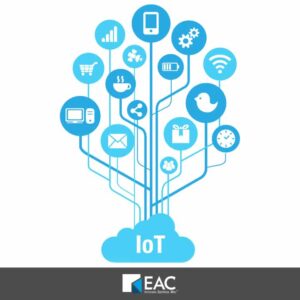
Connecting the beer tank sensors with machine learning gave Deschutes an IoT solution and allowed them to improve their brew processes. Deschutes reduced their fermentation process by 24-48 hours. They are now able to focus more time on creating new brands and maintaining the quality of the existing ones. Deschutes is looking at furthering the use of this smart, connected technology by looking into using it for preventive maintenance for their equipment so that brewers would be alerted if parts are due for service or replacement.
Buffalo Wild Wings
Buffalo Wild Wings, headquartered in Minneapolis, MN, is a popular sports bar that has an average of 24-32 beers on tap. Due to major growth of the company and being one of the top 10 fastest-growing restaurants in the U.S., BWW needed to keep up with the growing demand of their customer’s needs. The company faced two major challenges. Both challenges prompted the need to leverage technology and the Internet of Things for an improved operational efficiency.
The first challenge was that they needed to eliminate the product loss that results from comping drinks, excessive or bad pours, and generous bartenders that give beer away without entering the sale in the system. BWW implemented a system called BeerBoard that monitors beer flow data from IoT sensors in the taps to Mulesoft, an Enterprise Service Bus (ESB), where managers can compare beer output to sales information pulled from their Aloha point-of-sale systems. Restaurant managers can accurately determine whether they are running an effective beer operation with the help of the IoT solution found from linking the sensors to BWWs data management systems.
Their second challenge was managing the demand of the assortment of beers for each location all year round. BWW used BeerBoard’s new SmartBar beer management platform to switch and assign new beers corresponding to tap lines. Pour data and sales data would be captured through the platform where all BWW restaurants would have access to the reports to measure performance of each beer. The ability to gain beer preference insight brought a powerful competitive advantage to Buffalo Wild Wing’s brand and reputation.
By working with a few different companies that provided the IoT flow sensors and a software solution to manage their data, BWW started to accurately predict preferences and optimize inventory planning. The company now leverages the Internet of Things to accurately track beer consumption.
How to Bring Your Products to Life with the IoT
Race up the learning curve and find a partner that’s driven to find and implement the right IoT solution for your unique business. Make sure they have the engineering expertise necessary to bring your products to life. EAC Product Development Solutions is a company that transforms the way companies design, manufacture, connect to, and service their products. EAC is on a mission to help companies innovate, optimize, and win in the marketplace by selecting the right IoT solution — like PTC ThingWorx. With ThingWorx allows organizations to connect their products to the Internet and give customers the tools they need for easy access and control.
Ready to dive in? Our team of specialists, engineers, and developers would love to help you bring a working proof of concept to life. The demo application image below is an example of how our engineers can use ThingWorx to pull together data from many sources and deliver data to your fingertips. The demo shows how a local brewery can use the app to access plant conditions, truck tracking, order tracking, weather forecasting, collaboration, and beer tasting — all in real-time simulation.

Watch our Connect Services video to see how our engineers can connect your products with the Internet of Things!
Knowledge is power. Keep track of your data if you’re not doing it already. You’re bound to learn something from it. Better yet – apply smart connectivity to your process. Contact our Design and Engineering Services at EAC Product Development Solutions to realize your product potential and to find your IoT solution.

Download our free Connect Services Brochure to see how you connect your products to the internet for a smarter technology solution.
