
Augmented Reality (AR) and Assisted Reality for digital work instructions have become a growth driver, or at least consideration, for many industries.
Yet moving everything from paper or ‘digital hard-copy’ to digital AR experiences seems to be a daunting task for large and small organizations alike.
The truth is, there are many ways to incorporate augmented reality into service, but many of these can disrupt current processes and be a challenge to implement.
This is why, our company (EAC Product Development Solutions), developed and created an easier way to make service information more accurate, relevant and accessible.

It allows you to easily deliver the content behind AR instructions, manuals, and guides to digital devices such as tablets, head-mounted displays, or cell phones.
Implementing AR for service should be easy. That is why we created a better way.
The tool is called AR Instruct – It easily connects traditional technical publication content to the AR world.
Digital Work Instructions & AR Instruct
AR Instruct enables “hands-free” execution of work instructions using the latest immersive technology including: Augmented Reality, Assisted Reality, and Mixed Reality.
Our AR solution works as an AR publishing engine that repurposes existing S1000D, Arbortext, or XML, technical publication content and simplifies the transition to hands-free and mobile paperless instructions.
The best part? AR Instruct requires no content re-authoring and no content rebuilding. It’s really that easy.
AR Instruct can even dynamically publish up-to-date work instructions from the latest document revision on your server. This will ensure accuracy, compliance, and quality.
Watch the video below to get a quick and easy introduction to AR Instruct.
How does AR Instruct work?
A Service Engineer scans a work order QR code to locate relevant service procedures.

Our AR publishing engine, AR Instruct, retrieves XML content and dynamically formats it for AR viewing. This requires no manual publishing at all.
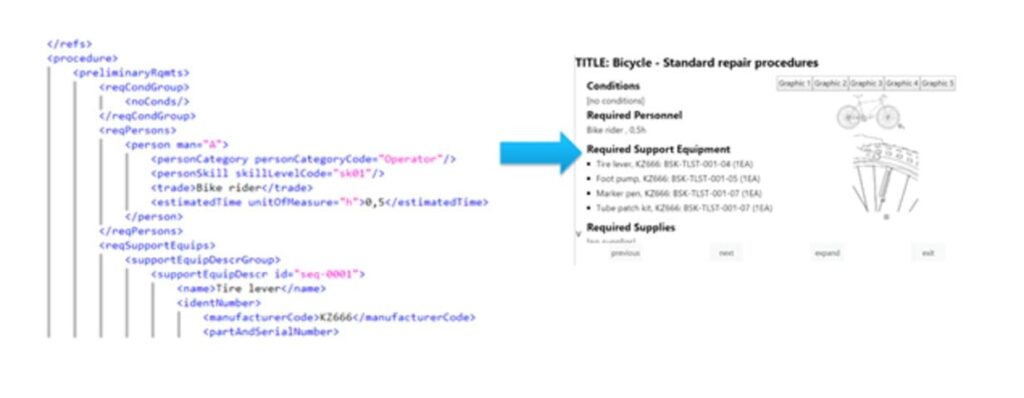
Using a digital device like a Vuzix or RealWear, the service engineer can navigate the AR content hands-free with voice commands.
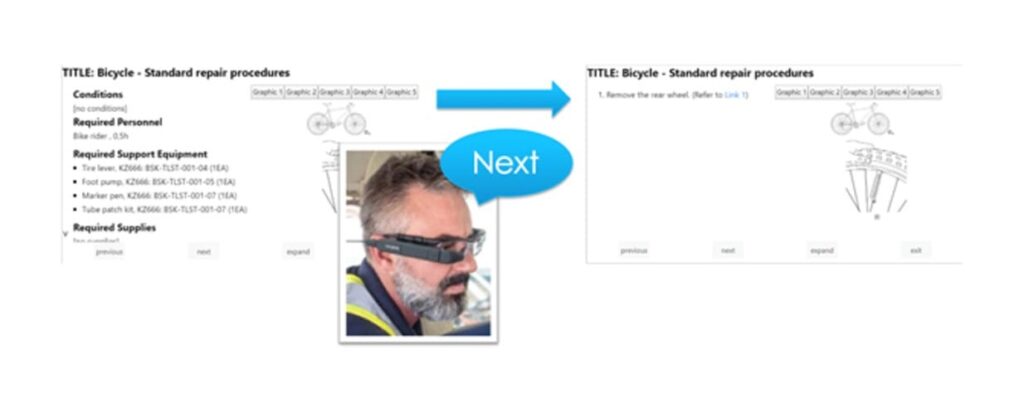
The Service Engineer can inspect each associated technical graphic related to the product.
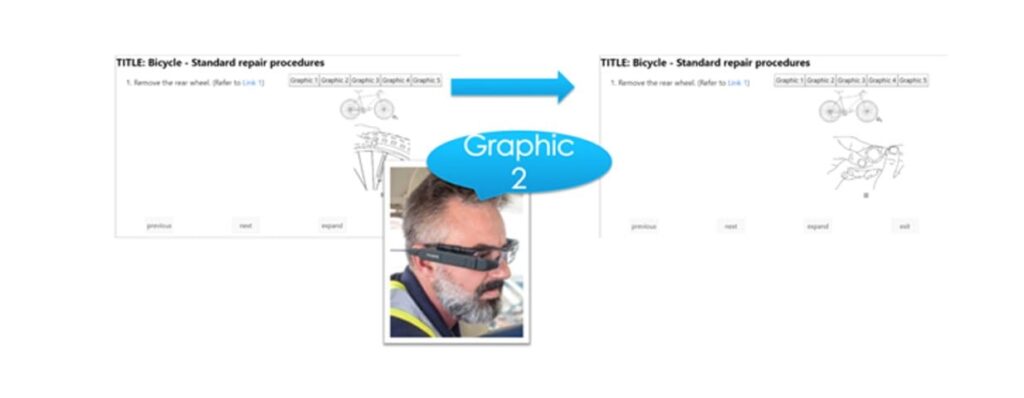
The Service Engineer can also expand any technical graphic or content for enhanced viewing.
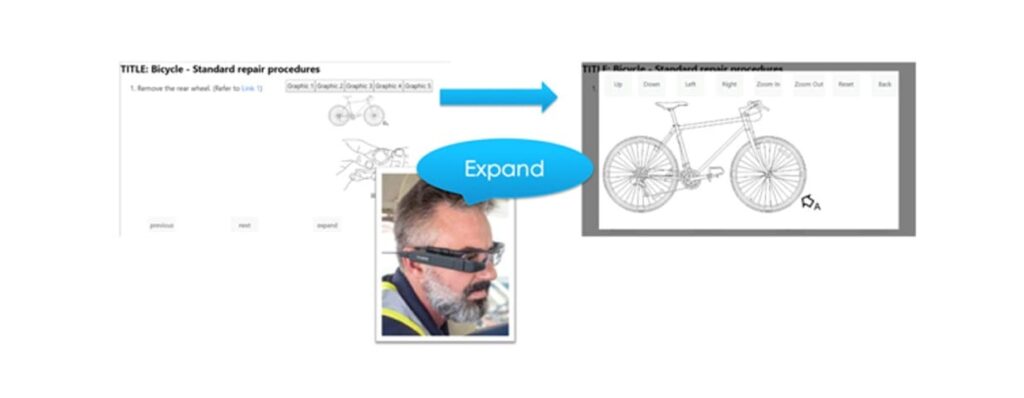
With the AR Instruct graphic viewer, the Service Engineer can pan and zoom any image by using voice commands. All buttons he or she sees are “readable” as voice commands.
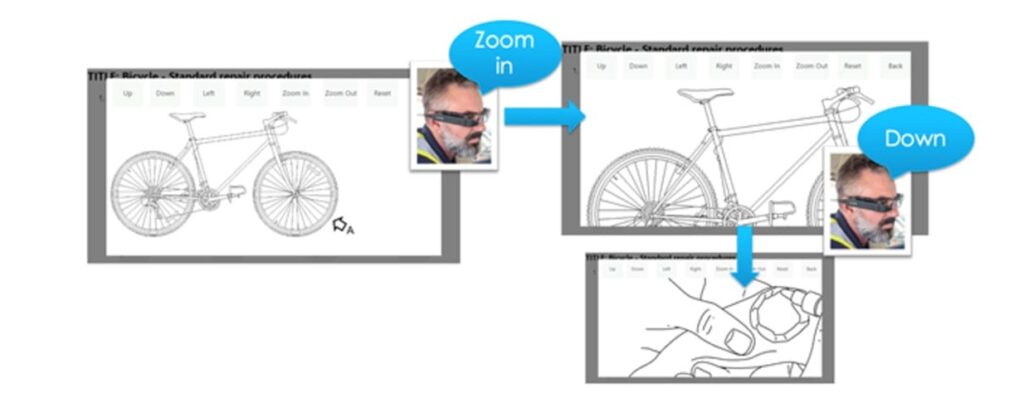
Using voice commands, the Service Engineer can navigate links to cross-referenced steps or procedures.
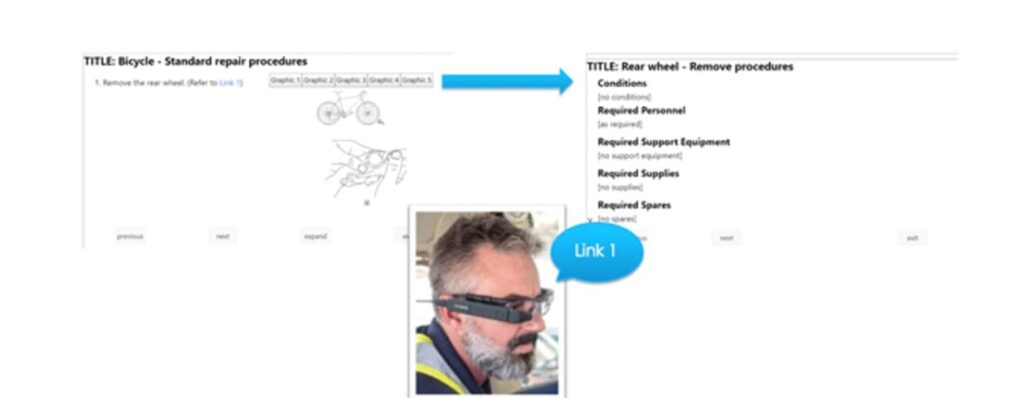
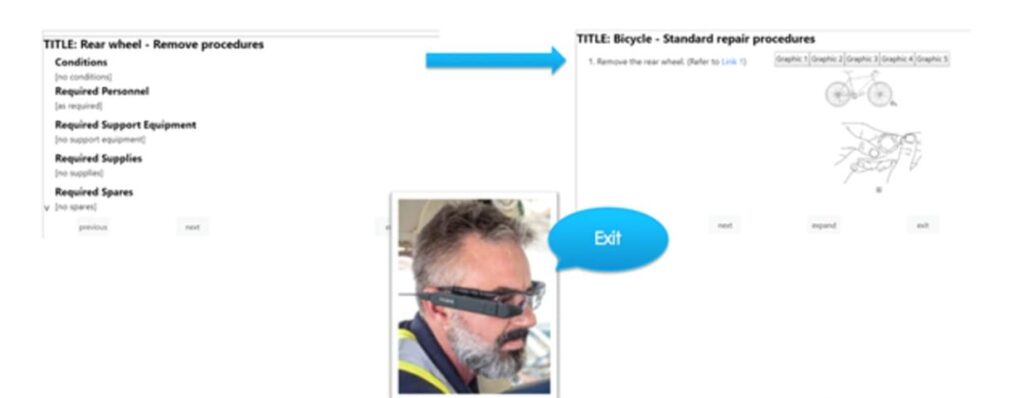
Once the Service Engineer is done with the cross-referenced content, he or she would be able to return to where they left off in the original service procedure.
When all steps are complete, the AR Instruct software notifies the Service Engineer that the procedure is done and all steps are recorded as complete.
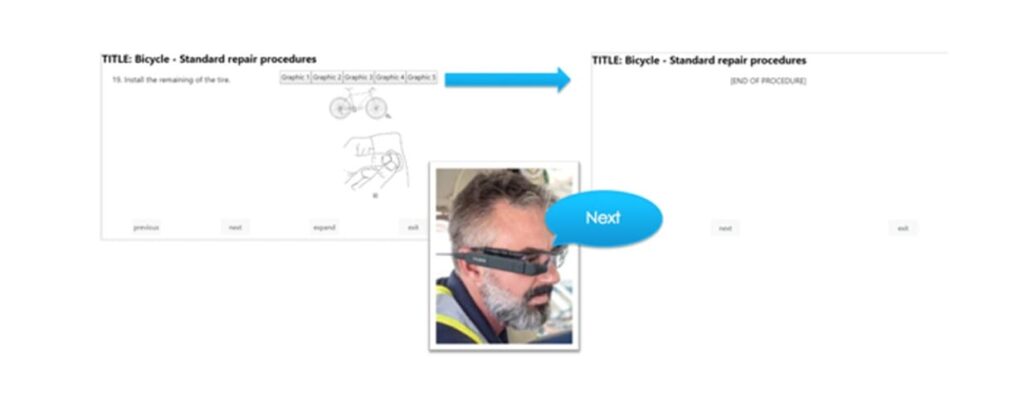
The Service Engineer exits back to the bar code scanner to begin a new work order or procedure.

It’s really that easy.
If you are looking to improve operational efficiency, appeal to the modern workforce, execute service checklists 3-5% faster and enable greater compliance and quality assurance over completed work instructions, AR Instruct is exactly what you need.
Want to see AR Instruct for yourself? Request a Demo today.
In today’s fast-paced digital environment, the demand for accurate, consistent, and timely product information is paramount. Traditional methods of technical documentation, often reliant on manual processes and disparate tools, fall short in meeting these demands. This is where PTC Arbortext emerges as a game-changer. It offers a dynamic publishing solution that streamlines the creation, management, and delivery of technical content.
The Pitfalls of Traditional Documentation Methods
Many businesses rely on one or two technical writers to collect all required technical and digital information needed to create technical and marketing publications. Most of this effort is manual, using the tried and true method of emailing, calling, and walking down the hall to bug technical resources for information or a screen grab; over and over. Then the information is created using a one-and-done single-instance authoring software like Adobe FrameMaker, Adobe InDesign, or Microsoft Word.
This is a problem for a number of reasons, including:
- Inconsistencies and Errors: Manual data collection can lead to outdated or incorrect information permeating through various documents.
- Inefficiencies: Repetitive tasks and lack of automation slow down the documentation process, delaying product releases.
- Scalability Issues: As products become more complex, managing documentation manually becomes increasingly untenable.
Just think of everywhere incorrect information could live if an update is missed. Web sites, user manual libraries, manufacturing instructions, service instructions, printed manuals, marketing literature, and the list goes on. This can increase the risk of providing out-of-date or inaccurate information to customers, manufacturing personnel, and service technicians.
Embracing Dynamic Publishing with Arbortext
PTC Arbortext offers a comprehensive solution to these challenges by enabling dynamic publishing. This method automates and integrates the entire documentation lifecycle. Key benefits include:
- Single Source of Truth: Centralize content to ensure consistency across all documentation.
- Automated Updates: Link documentation directly to product data, allowing automatic updates when changes occur.
- Multi-Channel Delivery: Publish content across various formats and platforms without redundant efforts
Core Components of the Arbortext Suite
When arguing for Arbortext, there’s strength in overarching capabilities. However, there’s also the power and precision of its individual components. Like many other PTC product lines, Arbortext boasts a suite of several integrated tools. This robust ecosystem of tools work together to streamline structured content creation, styling, and publishing. This empowers technical teams to do more, faster, and with fewer errors. These extensions have been designed to enhance the documentation process. They include:
- Arbortext Editor: A powerful, XML-based authoring tool designed for creating structured content. It supports real-time validation, ensuring content conforms to required standards as it’s written. This not only improves accuracy but also reduces the need for post-creation corrections.
- Arbortext Styler: A stylesheet design application that lets users visually create and manage styles for multiple output formats. Publishing to PDF, HTML, or EPUB? Styler allows organizations to control formatting rules without needing to write code, greatly simplifying the publishing process.
- Arbortext Publishing Engine: The automation hub of the suite, this engine assembles, formats, and publishes content from Arbortext Editor using predefined styles and templates. It eliminates manual tasks and ensures consistent, repeatable publishing workflows across the enterprise.
Together, these tools form a tightly integrated publishing solution. This solution enables organizations to maintain consistency, scale their documentation efforts, and reduce operational risk. Whether you’re a single author or managing a global documentation team, the Arbortext suite equips you with the foundation to build and deliver content that’s smart, structured, and future-ready.
Integration with PTC Windchill for Enhanced Content Management
One of the most compelling reasons to argue for Arbortext is its seamless integration with PTC Windchill, a leading product lifecycle management (PLM) system. This connection allows organizations to manage both product data and technical content within a single, unified platform. By linking Arbortext with Windchill, companies gain tighter control over content versioning, reuse, and approval processes, which is critical in regulated industries or highly complex product environments.
Windchill serves as a single source of truth, ensuring that content creators always work with the most up-to-date product data and documentation. This reduces the risk of inconsistencies between product updates and technical materials—whether it’s a service manual, part catalog, or training content. Integration also supports granular access control, workflow automation, and traceability, helping teams stay audit-ready and in compliance.
Together, Arbortext and Windchill form a powerful digital thread that connects engineering, manufacturing, and documentation teams across the entire product lifecycle. This integration not only accelerates content creation and delivery but also reinforces data integrity and operational efficiency, making it a cornerstone argument in favor of adopting Arbortext for dynamic publishing.
Real-World Impact: Efficiency and Accuracy
When arguing for Arbortext, it’s essential to look beyond features and focus on real-world outcomes. Organizations that implement Arbortext experience measurable gains in both operational efficiency and content accuracy. By automating manual processes like formatting, layout, and publication, teams spend less time on repetitive tasks and more time on high-value content creation. This leads to faster documentation cycles and reduced time-to-market for products.
Dynamic publishing ensures that information is consistent across all deliverables, minimizing the risk of errors or outdated content reaching end users. Technical writers can generate multilingual, multi-format documents in a fraction of the time it would take using traditional tools, and updates can be made globally with just a few clicks.
Ultimately, Arbortext isn’t just about creating content—it’s about transforming how content is managed, updated, and delivered throughout the organization. These efficiency and accuracy gains drive real business value, making a strong, results-based case for integrating Arbortext into your enterprise content strategy.
Making the Case for Arbortext
In an era where information accuracy and speed are critical, arguing for Arbortext becomes a matter of strategic importance. Making the move from manual technical publications to what we just described allows tech writers to focus on optimization of publishing methods rather than data collection and integration. It helps insure overall accuracy of product data throughout the company and in the marketplace. By transitioning to dynamic publishing with PTC Arbortext, organizations can overcome the limitations of traditional documentation methods, ensuring that their technical content is accurate, consistent, and delivered efficiently across all platforms.
