
If your organization is using Windchill today, you cannot ignore the shift to Windchill ePLM licensing. PTC’s move to ePLM represents a fundamental change in how companies license, scale, and operate their PLM environments. And while it may appear to be a licensing update on the surface, the reality is much bigger. It’s a shift toward aligning PLM systems with how teams actually work.
For many organizations, this transition will expose inefficiencies, gaps, and opportunities that have existed for years.
What Is Windchill ePLM?
Windchill ePLM (Enterprise PLM) is PTC’s new role-based licensing model that replaces traditional bundled licensing structures.
Historically, Windchill licenses were packaged into tiers like:
- Base
- Advanced
- Premium
These bundles often resulted in users having more access than they needed, others lacking critical functionality, and complex and difficult-to-manage license structures.
With ePLM, licensing is restructured around three main things. The first is Role-Based Access. Users are assigned licenses based on what they actually do, not what bundle they were placed into years ago. The second is Modular Capabilities. Capabilities are aligned to job function, allowing more precise control over access. Finally, Scalable Licensing. As teams grow or roles evolve, licensing can adapt more easily.
Why PTC Is Moving to ePLM
The transition to Windchill ePLM licensing is driven by a few key realities. First, legacy licensing doesn’t reflect modern teams. Today’s product development environments are more collaborative, more cross-functional, and more data-driven.Unfortunately, legacy licensing wasn’t designed for distributed teams and integrated systems.
Second, over-licensing and underutilization. Many organizations are paying for capabilities users don’t need andmissing capabilities other users do need.This creates both cost inefficiency and workflow friction.
Third is increasing complexity in PLM environments. As organizations scale, Windchill environments often become harder to manage, harder to govern, and harder to optimize. Windchill ePLM is designed to simplify and modernize this.
Key Deadline: What You Need to Know
PTC has made it clear: Legacy Windchill licensing models will no longer be renewable in the near future.
That does that mean for you? Every organization running Windchill will need to evaluate their current licensing, map to ePLM roles, and plan and execute a transition.
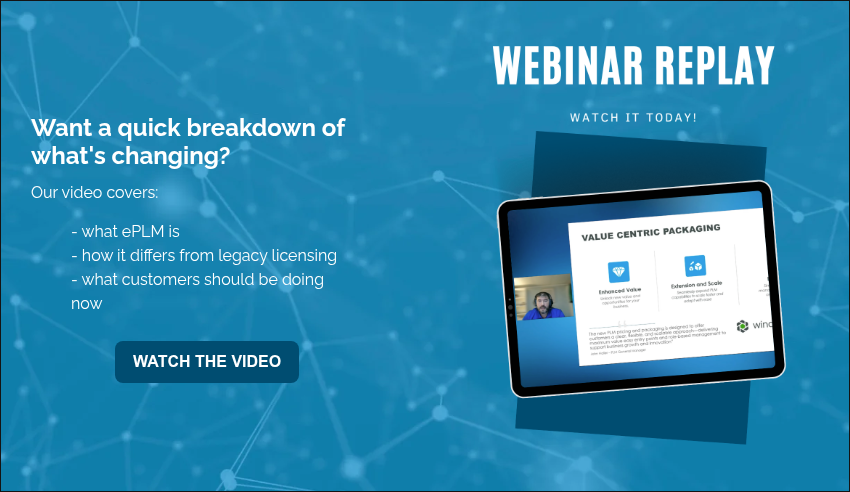
Want a quick breakdown of what’s changing? The webinar replay below shares just that.
What the Windchill ePLM Transition Actually Involves
The transition to ePLM is not just a contract change. It’s an operational change. Let’s have a look at how it typically goes.
The first step is license mapping. It’s vital to map existing users to new ePLM roles and identify gaps and overlaps. Next comes user segmentation. Companies must define user groups based on real workflows and align capabilities with responsibilities. The third step is system validation. Ensure users retain required access and test workflows across teams.
The fourth step is the cleanup of legacy complexity: remove unused licenses, simplify license structures, and optimize cost and usage. Finally is the transition execution. Here companies must implement the new license model, train users if needed, and monitor adoption and performance.
Common Challenges with Windchill ePLM
All written out, it’s easy to feel overwhelmed. This transition carries a level of complexity companies generally aren’t equipped to handle themselves. Unfortunately, organizations can underestimate the transition. When they do, they often run into issues like the following.
Some treat it as a procurement exercise. They focus only on pricing and license counts, instead of system performance and workflow alignment. Or there’s a lack of visibility into current usage. Many teams don’t have a clear view of how licenses are used and what users actually need. There may also be misalignment between roles and access. Without proper planning, users lose accessor gain unnecessary access. Both create friction.
The Bigger Opportunity: Fix What’s Broken
The reality is this: the Windchill ePLM transition is a forcing function. It forces organizations to look at how their system is structured, how their teams actually work, and where inefficiencies exist.
The companies that get the most value from ePLM are the ones that use it to improve system alignment, matching PLM to real workflows. They’ll also see increased user adoption, by giving users the tools they actually need. Organizations benefit additionally from reduced complexity, with ePLM simplifying the licensing and system structure. Further, they enable an intelligent product lifecycle, connecting data around the product from first design to the manufactured version and beyond.
How Windchill ePLM Supports the Intelligent Product Lifecycle
One of the biggest advantages of ePLM is how it supports broader digital engineering initiatives. By aligning access and capabilities to roles, organizations improve data flow across teams, reduce bottlenecks, enable better collaboration, and support end-to-end traceability. This is critical for complex manufacturing, regulated industries, and digital transformation initiatives.
Where to Start with Windchill ePLM
If you’re early in the process, start with understanding your current state. Who is using Windchill? What capabilities are actually used? Where are the gaps? From there, you can begin identifying misalignment: over-licensed users, under-supported roles, and inefficient workflows. Then, define your future state. You should be able to determine what your system should support and how your teams should interact with it. The last step is building a transition plan, including timeline, role mapping, and risk mitigation.
Let’s Help You Navigate the ePLM Transition
Most organizations don’t need more tools. They need clarity.
If you’re evaluating the Windchill ePLM transition, we can help you:
- Map your current licenses to ePLM
- Identify inefficiencies in your system
- Build a practical transition plan
- Ensure your system supports your business, not just your software
Start the conversation with our team.
Final Thoughts: This Is Bigger Than Licensing
Windchill ePLM is not just a change in how you license software. It’s a shift in how your PLM system supports your organization. The question isn’t: “How do we switch to ePLM?”
It’s: “How do we make our system actually work?”
Because for most organizations, the transition will surface challenges that have been building for years: misaligned processes, disconnected systems, and workarounds that quietly slow everything down. Teams that approach this as an opportunity, not just a requirement, will come out with stronger systems, better alignment, and more confidence in how they operate.

Selecting the right Product Lifecycle Management (PLM) system is a strategic decision that affects innovation, efficiency, and long-term profitability. For companies navigating product complexity, regulatory demands, and the pressure to innovate faster, PTC Windchill stands out as a proven, scalable PLM solution that connects teams, systems, and data across the entire product lifecycle. Looking to institute a PLM solution or switch to a new one? Here we answer some of the most common questions companies ask when evaluating Windchill, covering productivity gains, ROI, cost savings, and why it continues to lead the PLM market.
How does Windchill reduce product development time?
Windchill reduces product development time by connecting all product data, from CAD and BOMs to documents and workflows, in one centralized platform. This eliminates the inefficiencies of siloed tools, manual approvals, and redundant data entry. Engineering teams can collaborate in real time with automated workflows and version control. No more waiting for updates or chasing files. The result is faster design cycles, fewer delays between engineering and manufacturing, and shorter time-to-market for new products.
What is the ROI of implementing Windchill PLM?
Organizations that implement Windchill typically see measurable ROI through efficiency gains, reduced rework, and better change management. By creating a single source of truth for product information, companies cut down on wasted engineering hours spent searching for data or reconciling outdated files. Many manufacturers report ROI within 12–24 months as they reduce production errors and accelerate time-to-market. Beyond direct cost savings, Windchill’s ROI also comes from improved agility. This agility helps businesses innovate faster and respond to market changes with confidence.
How does Windchill improve efficiency and reduce rework?
Windchill’s built-in change management tools ensure that every update, approval, or revision is tracked and linked to the appropriate product data. This reduces the risk of teams working from outdated designs or incomplete information, a common cause of rework and scrap. Automated impact analysis shows how a proposed change affects related assemblies, documents, and manufacturing instructions. This visibility enables teams to make data-driven decisions, preventing downstream mistakes and significantly improving first-time-right performance.
What cost savings can companies expect from Windchill?
Windchill delivers cost savings by reducing operational inefficiencies and eliminating hidden costs associated with manual processes. By centralizing data and automating approvals, companies save hours of administrative work per project. The platform also helps lower production waste, warranty claims, and compliance penalties by ensuring every product is built to the latest approved specifications. Over time, these incremental savings compound, driving millions in reduced overhead and improved profitability for manufacturers with complex product lines.
How does Windchill support sustainability and innovation initiatives?
Sustainability starts with better data, and Windchill enables that by providing visibility across the product lifecycle, from design to disposal. By connecting engineering with sourcing and manufacturing, organizations can evaluate material choices, supplier impact, and end-of-life performance early in the design process. Its digital thread capabilities ensure decisions are based on accurate, real-time information, supporting initiatives like lightweighting, recyclability, and energy-efficient manufacturing. For innovation, Windchill integrates seamlessly with Creo and ThingWorx, creating a foundation for model-based design, IoT-enabled insights, and AI-driven optimization.
What KPIs can be improved by using PLM software like Windchill?
Windchill directly impacts key operational and business performance metrics. Engineering efficiency KPIs, such as time-to-market, design cycle time, and engineering hours per project, improve through automation and collaboration tools. Quality metrics like first-pass yield, change implementation time, and error rates also show measurable improvement. On the business side, KPIs related to revenue per product line, R&D cost efficiency, and compliance audit readiness all strengthen under a unified PLM environment that enhances data accuracy and visibility.
Why choose Windchill over other PLM systems?
Windchill’s edge lies in its balance of scalability, security, and openness. Unlike many competitors that require heavy customization, Windchill delivers out-of-the-box functionality aligned with industry best practices, making it faster to deploy and easier to maintain. It’s also the only PLM platform with DoD Impact Level 5 (IL5) accreditation, underscoring its commitment to security and compliance. Compared to solutions like Siemens Teamcenter, Windchill integrates engineering and manufacturing data within one platform, eliminating silos and enabling true digital thread continuity across the enterprise.
Is Windchill better for discrete manufacturing than other PLM platforms?
Yes. Windchill was designed with discrete manufacturing in mind, supporting industries such as aerospace, defense, automotive, electronics, and industrial machinery. Its robust BOM management, configuration control, and CAD integration make it ideal for companies managing complex assemblies and frequent product variations. While other PLM systems may split functionality between multiple applications, Windchill unifies design, production, and service data. This gives discrete manufacturers the precision and scalability they need to operate efficiently across global teams.
What makes Windchill unique in the PLM market?
What sets Windchill apart is its open architecture and deep integration with PTC’s broader digital ecosystem. It connects seamlessly with Creo for CAD design, ThingWorx for IoT analytics, and Vuforia for augmented reality. This enables manufacturers to move from design to production to service without data loss. Its cloud-first architecture offers flexibility for on-premise, hybrid, or SaaS deployment, giving companies control over scalability and compliance. Combined with continuous updates and built-in model-based engineering support, Windchill stands as the backbone of digital transformation in product development.
Can Windchill connect with ERP or MES systems?
Yes, Windchill’s integration capabilities allow it to connect directly with ERP (Enterprise Resource Planning) and MES (Manufacturing Execution Systems) to ensure complete synchronization between design, production, and supply chain operations. These integrations create a closed-loop digital thread, so when engineering makes a change, manufacturing and procurement see it immediately. Common connectors with systems like SAP and Oracle streamline data exchange and eliminate manual re-entry. This connectivity bridges the gap between engineering intent and manufacturing execution, enhancing agility, traceability, and operational efficiency.
Final Thoughts: Making the Case for Windchill
For organizations evaluating PLM systems, choosing Windchill means choosing scalability, security, and a connected digital future. It’s not just a data management tool. It’s a strategic enabler that reduces time-to-market, lowers costs, and aligns every function around accurate, accessible product information. With built-in integrations, industry-specific configurations, and world-class security certifications, Windchill offers unmatched value for manufacturers serious about operational excellence. Whether you’re modernizing legacy systems or launching a digital transformation initiative, Windchill provides the foundation to build faster, smarter, and more sustainable products.
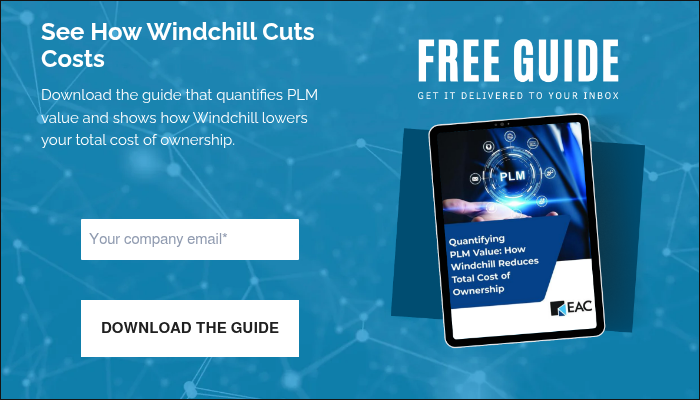
Looking for the concrete value Windchill provides organizations? We created this guide, Quantifying PLM Value, to do exactly that.

In the world of product development, speed, accuracy, and collaboration determine who leads… and who lags behind. As product designs grow more complex and teams become more distributed, having the latest capabilities in your PLM (Product Lifecycle Management) system can make all the difference.
That’s why knowing what’s new in Windchill is so important. Each new release of PTC Windchill delivers powerful enhancements that simplify data management, improve user experience, and strengthen the digital thread that connects design, manufacturing, and service. In this post, we’ll break down what’s new in Windchill 13, highlight its most impactful features, and explain how these updates help organizations stay agile and competitive in a rapidly evolving market.
What’s new in the latest version of Windchill?
The latest Windchill 13 release marks a significant leap forward for PTC’s industry-leading PLM platform. With new UI improvements, enhanced scalability, and advanced integration capabilities, Windchill 13 helps teams work smarter, not harder. Here’s a closer look at some of the top new features and enhancements:
1. Modernized User Experience
PTC has reimagined Windchill’s interface to be cleaner, more intuitive, and easier to navigate. The improved layout streamlines everyday tasks like document management, configuration, and workflow tracking, reducing clicks and improving user adoption.
The redesigned Windchill Navigate apps also provide simplified, role-based access to product data, ensuring that everyone – from engineers to service teams – can find the information they need quickly.
2. Performance and Scalability Enhancements
Windchill 13 introduces key architectural updates that boost system performance and scalability. Large assembly handling, concurrent user support, and faster search capabilities allow global teams to collaborate in real time without lag or data delays.
This makes the platform more reliable for enterprise-scale deployments, particularly for companies managing thousands of parts or operating across multiple sites.
3. Strengthened Change Management and Digital Thread Integration
Improved change management workflows make it easier to document, approve, and execute design and process changes within a single ecosystem. The new release enhances cross-functional visibility, so stakeholders can assess the downstream impact of changes across CAD models, BOMs, and documentation.
Windchill 13 also continues PTC’s push toward a connected digital thread, unifying data from design through manufacturing and service.
4. Expanded Openness and Integration Options
This flexibility helps teams extend the value of their product data beyond engineering, enabling smarter, connected operations across the entire product lifecycle.
5. Security and Compliance Improvements
As data security and regulatory compliance become increasingly critical, Windchill 13 introduces stronger encryption, access control, and audit-trail capabilities. These updates help organizations meet industry standards and safeguard sensitive product information while maintaining traceability from design through disposal.
How These New Features Benefit Your Organization
Understanding what’s new in PTC Windchill is just the first step. Knowing how these enhancements translate to business results is where the real value lies.
By upgrading to Windchill 13, organizations can:
- Accelerate product development with a faster, more responsive interface and workflow automation.
- Reduce data silos by connecting PLM to IoT, AR, and other enterprise systems.
- Enhance collaboration across engineering, manufacturing, and service teams using unified, real-time data.
- Lower operational costs by improving scalability and reducing system maintenance.
- Stay compliant and secure through better governance, version control, and audit capabilities.
Simply put, the latest Windchill release helps teams work more efficiently, make better decisions faster, and stay ahead in a competitive, connected world.
What to Consider Before Upgrading Windchill
While the benefits of Windchill 13 are compelling, upgrading should be a strategic decision, not a rushed one. Before moving forward, evaluate your readiness and long-term goals.
Consider the following:
- System Readiness: Verify hardware and architecture compatibility to ensure a smooth deployment.
- Process Alignment: Review your existing workflows and confirm they align with new Windchill functionality.
- Data Quality: Take the opportunity to clean and standardize your product data before migration.
- User Training: Make sure your teams are prepared for the updated interface and processes.
- Integration Dependencies: Confirm that CAD, ERP, and other connected systems are compatible with the new version.
By planning ahead, you’ll maximize your ROI and avoid common pitfalls that can slow or complicate upgrades.
Tips for a Smooth Upgrade and Adoption
A successful upgrade is about more than installing software. It’s about adoption, optimization, and continuous improvement.
Here are a few practical tips for success:
- Start with an Assessment. Evaluate your current environment and identify upgrade prerequisites.
- Pilot Before Rolling Out. Test new features with a small user group to identify issues early.
- Clean Your Data. Ensure your product information is structured and accurate to prevent migration issues.
- Communicate Early and Often. Keep stakeholders informed and engaged throughout the process.
- Provide Role-Based Training. Tailor learning materials for different user groups to increase adoption.
Understanding what’s new in Windchill is just one part of the equation. Adopting it effectively is where you’ll realize the most value.
Why Partner with EAC for Your Windchill Upgrade
EAC Product Development Solutions has helped hundreds of companies upgrade, migrate, and optimize their Windchill environments. Our team can guide you through every step. From assessing readiness and planning upgrades to configuring workflows and training users. Whether you’re moving from an older Windchill version or integrating with Creo, ThingWorx, or other systems, EAC ensures your transition is smooth, secure, and value-driven.
Learn more about our Windchill Upgrade and Implementation Services today!
Stay Ahead with the Latest in Windchill
The newest Windchill release reinforces PTC’s commitment to helping manufacturers achieve faster innovation, stronger collaboration, and better product lifecycle visibility. If your team relies on Windchill for design, manufacturing, or service collaboration, now is the time to explore the benefits of upgrading. The latest version isn’t just an update. It’s a platform for the future of connected, data-driven product development.
Interested in learning more about the importance of PLM? Explore how foundational PLM is in our guide: Digital Transformation Starts with PLM.

In a competitive, fast-paced world where innovation is key, businesses need better tools to manage the growing complexity of product development. That’s where PLM comes in. But what is PLM really, and why is it becoming a must-have for organizations across industries?
PLM, or Product Lifecycle Management, is more than just software. It’s a business strategy and digital solution that supports a product from its initial idea all the way through retirement. In this guide, we’ll explore what PLM is, how it works, and why it’s transforming the way companies design, build, and support their products.
What is PLM?
PLM stands for Product Lifecycle Management. At its core, PLM is a systematic approach to managing the entire lifecycle of a product, from inception, through engineering design and manufacturing, to service and disposal.
Think of PLM as the digital backbone of your product information. It connects people, processes, and data across the organization, ensuring that everyone is working with the latest, most accurate information. Unlike standalone systems that manage specific functions, PLM offers a unified solution across the lifecycle. PLM System software is the platform of centralized data, workflows, and governance that enable enterprise visibility.
The Stages of the Product Lifecycle & How PLM Applies
Every product goes through a journey, from a rough idea sketched on a whiteboard to a physical item in a customer’s hands, and eventually, retirement. At each stage, there are critical decisions, documents, and data that must be captured and connected. Product life management helps orchestrate that journey by creating a consistent, collaborative framework to manage everything from concepts to compliance.
1. Concept & Requirements Gathering
This is the earliest phase of product development, where new ideas are born based on market demands, customer feedback, or internal innovation. PLM systems help capture all these inputs in a centralized location. With PLM, stakeholders can manage initial concepts, define high-level requirements, track voice of the customer (VoC) insights, and ensure alignment with corporate strategy.
2. Design & Development
During this phase, engineering teams create detailed product designs using CAD tools integrated within the PLM system. PLM enables real-time collaboration between cross-functional teams, ensuring that every component and sub-assembly is properly documented and reviewed. It facilitates the creation and control of Bills of Materials (BOMs), technical specifications, and digital mockups. Version control ensures that everyone is working with the most up-to-date information, reducing costly errors and design rework.
3. Prototyping & Validation
Before full-scale production, companies often build physical or virtual prototypes to validate the product design. PLM tracks test results, simulation data, and validation reports. It helps manage issues that arise during testing and supports closed-loop feedback mechanisms to drive design improvements. This stage may also include regulatory validation, and PLM ensures that all required documentation and traceability records are maintained for audit-readiness.
4. Manufacturing & Production
PLM plays a critical role in bridging the gap between engineering and manufacturing. Approved designs and specifications are transferred seamlessly to ERP and MES systems. PLM ensures that shop floor instructions, tooling data, and assembly procedures are accurate and consistent with the final design. It also helps manage change orders, track supplier compliance, and maintain cost-effective production schedules.
5. Service & Support
After a product hits the market, PLM continues to provide value by storing service documentation, maintenance manuals, parts catalogs, and technical bulletins. Field data and service reports can be fed back into the PLM system, enabling organizations to track product performance, identify recurring issues, and proactively manage warranties or recalls. This feedback loop is essential for improving future product generations.
6. Retirement/Disposal
Eventually, products reach end-of-life. Whether due to obsolescence, regulatory shifts, or market changes, PLM helps manage the retirement process responsibly. This includes tracking final product revisions, archiving compliance documentation, and ensuring proper disposal of components per environmental standards. It also supports historical audits and knowledge reuse for next-gen products.
By supporting each of these stages, PLM provides a continuous thread of digital information that enhances decision-making, streamlines workflows, and drives product success across its entire lifecycle.
Benefits of Using PLM Software
Adopting a PLM solution doesn’t just optimize product development. It transforms the way your entire organization works. From faster innovation cycles to better compliance and collaboration, PLM delivers measurable improvements that impact your bottom line. Below are some of the most significant benefits businesses experience when implementing PLM software like Windchill:
- Faster Time-to-Market
PLM automates workflows and approvals, reducing time spent on manual tasks and accelerating product launches. Streamlined collaboration allows teams to quickly iterate on designs and bring new innovations to market faster. - Improved Product Quality
With centralized data management and real-time access to product information, PLM reduces the likelihood of errors, inconsistencies, or outdated documents. This results in fewer design flaws, improved manufacturing outcomes, and higher-quality end products. - Enhanced Collaboration Across Departments
PLM breaks down silos by enabling cross-functional collaboration between engineering, manufacturing, procurement, and quality assurance. Everyone works from the same source of truth, which improves communication, alignment, and decision-making. - Better Regulatory Compliance
Especially critical in industries like medical devices, aerospace, and automotive, PLM ensures full traceability of design changes, audit trails, and documentation. Compliance with standards like ISO 13485 and FDA 21 CFR Part 11 becomes easier and more consistent. - Cost Reduction
PLM minimizes costly rework, scrap, and delays by improving design accuracy and change control. It also reduces the overhead associated with managing product data manually, leading to long-term operational savings. - Innovation Enablement
By fostering a digital environment where ideas can be easily captured, shared, and iterated upon, PLM supports continuous innovation. Features like simulation, digital twins, and advanced visualization allow companies to test ideas without physical prototypes. - Increased Data Visibility and Governance
PLM provides structured access to product data across departments and geographies. With user roles and permissions, it ensures that the right people have the right access at the right time, supporting data integrity and security. - Improved Change and Configuration Management
PLM simplifies how teams handle engineering changes, ensuring that all impacted documentation and processes are updated and approved. It also allows easy management of product variants and configurations. - Stronger Supplier and Partner Collaboration
Through secure portals and integrations, PLM allows companies to extend product data access to suppliers and external partners, improving coordination, reducing lead times, and increasing trust throughout the value chain. - Sustainable Product Lifecycle Decisions
PLM can support environmental compliance and sustainability efforts by tracking materials, assessing lifecycle impacts, and helping organizations meet evolving regulatory and ethical requirements.
By adopting PLM, companies are not just investing in a software tool. They are building a more agile, connected, and competitive business.
What does PLM (Product Lifecycle Management) mean in manufacturing?
The manufacturing industry is one that benefits most from PLM. PLM consolidates data and improves design control. Engineers no longer waste time looking for data or wondering if it’s up to date. Teams gain a central location for managing revisions and BOMs. Additionally, PLM strengthens change management, compliance, and scalability. As products become more complex, the ability to manage variants and configurations is essential. PLM ensures consistency, even across global teams.
PLM vs ERP: Understanding the Difference
From time to time, people can confuse PLM and ERP. While they work together, these are different systems that serve different purposes.
- PLM (Product Lifecycle Management) manages product development data: designs, requirements, documents, and changes.
- ERP (Enterprise Resource Planning) manages business operations: inventory, procurement, finance, HR, and logistics.
So, where does PLM end and ERP begin? PLM comes first. It feeds accurate product data into ERP systems so that manufacturing, purchasing, and logistics can act on it.
You can think of PLM as the brain of product innovation; ERP is the muscle that gets things made and delivered. Looking for better understanding of the differences between PLM and ERP… and MRP? Check out our blog, ERP / MRP / PLM: Understanding the Differences and How They Work Together.
Who Uses PLM?
PLM is used across departments and roles within organizations, including design engineers, project managers, compliance officers, quality managers, and manufacturing engineers. All of them benefit from centralized access to accurate product data.
Industries using PLM include:
- Aerospace and Defense: To manage complex compliance requirements, configurations, and long product lifecycles.
- Automotive: To streamline design iterations, ensure quality standards, and manage global supply chains.
- Medical Devices: For strict regulatory compliance, traceability, and quality control throughout the product lifecycle.
- Industrial Equipment: To manage large assemblies, engineer-to-order products, and after-market service support.
- Consumer Products: To bring innovative products to market faster, manage seasonal SKUs, and align with branding.
- Electronics: To handle rapid product refreshes, component obsolescence, and global collaboration among teams.
Modern PLM Solutions & Trends
Today’s PLM platforms are evolving rapidly to support digital transformation. These solutions are becoming more intuitive, scalable, and tailored to fit a variety of industries. Companies are moving toward cloud-first approaches and integrating advanced technologies to drive better decisions and faster innovation.
- Cloud-Based PLM: Faster deployment, lower IT overhead, and easier updates.
- IoT Integration: Real-time performance data from connected products.
- AR/VR Support: Advanced visualization for design and training.
- AI-Driven Insights: Predict quality issues or suggest design improvements.
- Digital Thread: Seamless flow of information across the lifecycle.
- Model-Based Engineering (MBE): Single source of truth for all stakeholders.
Common Challenges Without PLM
Without a Product Lifecycle Management system in place, companies often face several critical challenges that hinder productivity, innovation, and product success:
- Data Silos
Teams store product data in disconnected systems or local folders, making collaboration difficult and increasing the risk of working with outdated or inconsistent information. - Lack of Version Control
Without automated version tracking, it’s easy for teams to overwrite each other’s work or rely on incorrect designs, leading to costly errors and rework. - Manual Workflows
Processes such as approvals, change requests, and document management are handled manually, slowing down product development and increasing the likelihood of human error. - Poor Collaboration
Disconnected departments struggle to stay aligned, resulting in communication gaps, duplicate work, and misinformed decision-making across the product lifecycle. - Compliance Risks
Without centralized documentation and traceability, companies may fail audits, fall out of regulatory compliance, or miss required certifications. - Delayed Time-to-Market
The inefficiencies caused by data silos, manual tasks, and miscommunication lead to slower product development cycles and delayed product launches. - Higher Costs
Errors, inefficiencies, and rework increase operational costs and reduce profitability, especially when products require frequent changes or updates. - Limited Visibility
Managers and executives lack real-time insights into product status, making it difficult to identify bottlenecks or make data-driven decisions.
By addressing these challenges, PLM empowers organizations to streamline operations, enhance collaboration, and ensure successful product outcomes from start to finish.
Getting Started with PLM
Not sure if your organization needs PLM? Ask yourself:
- Are product launches delayed?
- Do you struggle with version control?
- Is compliance documentation a nightmare?
- Are design and manufacturing teams out of sync?
If you answered yes to any of these, a PLM system can help. The next step is assessing your current product development processes and identifying pain points that PLM could solve. Then, engage cross-functional stakeholders (including engineering, IT, operations, and executive leadership) to define goals and secure buy-in.
Start small by implementing PLM in a focused area, such as engineering change management or BOM control, to prove value and demonstrate ROI. From there, scale gradually by expanding features, integrating with ERP systems, and digitizing more of your product lifecycle processes. Partnering with a trusted PLM solutions provider, like EAC, can also accelerate success through expert guidance, user training, and customized implementation services.
PLM Best Practices for Successful Adoption
Implementing a PLM system is more than a software deployment. It’s an organizational transformation. Companies that see the greatest return on their investment follow proven PLM best practices that align people, processes, and technology from the start.
Below are several high-level best practices that help ensure long-term success with product lifecycle management.
Executive Sponsorship
Strong executive sponsorship is one of the most important PLM best practices. Because PLM touches multiple departments (engineering, manufacturing, quality, supply chain, and leadership) visible support from executive stakeholders ensures alignment, funding, and organizational priority.
Executive sponsorship also helps reinforce that PLM is a strategic initiative, not just an engineering tool.
Defined Governance and Ownership
Successful product life management requires clearly defined governance. This means establishing: process ownership, approval workflows, change control standards, and data accountability.
Without governance, even the most advanced PLM system software can become inconsistent and underutilized. A structured framework ensures that product data, engineering changes, and lifecycle processes are managed consistently across the organization.
Change Management Planning
PLM implementation often reshapes how teams collaborate and manage product information. One of the most overlooked PLM best practices is proactive change management planning.
Organizations should prepare teams for new workflows, updated responsibilities, standardized documentation processes, and increased transparency across departments. Clear communication and stakeholder involvement help reduce resistance and accelerate adoption.
Data Cleansing Before Migration
A PLM system is only as strong as the data inside it. Before migrating legacy data, organizations should evaluate and clean existing files, bills of materials, and documentation.
Removing duplicates, correcting outdated revisions, and standardizing naming conventions helps ensure that the new system begins with a reliable foundation. For many companies, this process starts by stabilizing engineering data through structured product data management (PDM) practices before expanding into broader lifecycle management.
Cross-Functional Alignment
Product lifecycle management delivers the most value when departments operate from a shared source of truth. Aligning engineering, manufacturing, quality, and supply chain teams around standardized processes ensures that PLM supports enterprise-wide visibility.
This cross-functional alignment becomes especially important when connecting PLM to other enterprise systems. For example, effective PLM ERP integration ensures that product definitions, bills of materials, and engineering changes flow accurately into production and operational systems.
Building a Foundation for Long-Term Success
Adopting PLM system software is not simply about managing product data. It’s about strengthening governance, improving collaboration, and enabling scalable product life management across the organization.
By following these PLM best practices (executive alignment, structured governance, thoughtful change management, clean data migration, and cross-functional coordination) organizations position themselves for sustainable lifecycle control and measurable business impact.
Introducing PTC Windchill
PTC Windchill stands out as a leading PLM solution because it offers a powerful combination of robust functionality, scalability, and user-friendly design. This makes it ideal for organizations looking to streamline and modernize their product development processes. As a comprehensive digital backbone, Windchill enables real-time collaboration across global teams, secures a single source of truth for product data, and supports everything from design and change management to compliance and quality control. With its out-of-the-box capabilities, flexible deployment options (including cloud-based), and seamless integration with tools like Creo and ThingWorx, Windchill empowers companies to innovate faster, reduce costs, and stay competitive in today’s fast-paced market.
Next Steps with PLM
So, what is PLM? It’s more than just software. It’s a strategy that empowers organizations to manage product complexity, accelerate innovation, and ensure product success across every stage of the lifecycle. If you want to improve efficiency, enhance collaboration, and stay competitive in a digital-first world, implementing PLM is a critical step forward.
At EAC, we work alongside manufacturers to fix the broken parts of product development by connecting systems, people, and processes. We help organizations implement and optimize PLM so their teams can move from chaos to clarity, building better products faster and with confidence. That starts with providing content to help you make big decisions.
Ready to connect what’s new to what matters? Get our guide that explains how PLM becomes the backbone of digital transformation:
Windchill is a mission-critical enterprise system with multiple components and touch points across an entire enterprise. Because of this complexity, you might recognize the need for Windchill Managed Services. EAC has created a managed services program for your Windchill system: the EAC Alliance Program. The Alliance Program provides PTC Windchill managed services such as Windchill administration and support.
Our team of expert system administrators help improve system performance, optimize server and license configurations, and maintain a stable PLM environment for your organization. Looking to understand what we deliver? Below are some frequently asked questions.
Frequently asked questions around Windchill Administration
When manufacturing and engineering leaders evaluate their PLM strategy, they have a lot of critical questions. Decision-makers need clear answers on what Windchill administration involves, when they should consider outsourcing, and what risks unmanaged environments pose. Below we provide focused answers to frequently asked questions to help you evaluate whether a Windchill managed services program is right for your organization.
What does Windchill administration involve and why is it important?
Windchill administration encompasses the full set of tasks required to keep your PLM system healthy, secure and aligned with organizational processes—such as user and license management, system configuration, performance tuning, and lifecycle/workflow definitions. Effective administration ensures data integrity, minimizes downtime, and keeps product data flowing smoothly across engineering, manufacturing and service operations. For example, administrators will manage user access, define roles/teams, configure workflows, administer object types and versioning, and monitor system logs to identify issues before they escalate.
Without dedicated administration, companies risk slow performance, inconsistent processes, and lost productivity—making this role foundational for any serious Windchill deployment.
When should a company consider outsourcing Windchill administration instead of managing it in-house?
Outsourcing Windchill administration makes sense when internal resources are limited, the system has become complex, or you want access to specialist expertise without hiring full-time staff. Many companies turn to managed services when they lack sufficient Windchill-specific knowledge in-house, or when maintaining uptime, performance, patching and monitoring become too burdensome for their IT/engineering teams. According to recent program data, partnering with a managed services provider can deliver high-availability environments and relieve internal teams to focus on strategic PLM usage rather than just maintenance.
If your Windchill system is integral to product development and you can’t afford extended downtime or degradation in performance, outsourcing can be the smarter and more scalable choice.
What are the typical risks of poorly managed Windchill environments?
When Windchill systems are under-managed, organizations face risks such as unplanned downtime, degraded system performance, data inconsistency, version misalignment, and security vulnerabilities from delayed patching. These issues can slow engineering workflows, hamper collaboration between teams, increase support costs, and even result in compliance or audit failures if product data is uncontrolled. For instance, if workflows or lifecycles aren’t properly configured, teams may inadvertently work on the wrong version of a part or document—leading to errors that propagate downstream. In highly regulated or competitive manufacturing sectors, these problems compromise innovation speed and product quality, making adequate administration essential rather than optional.
What types of administrative tasks are included in a Windchill managed services program (patching, system tuning, replication, license optimization)?
A Windchill managed services program typically includes proactive system tasks such as regular patching and updates, server and application performance tuning, license usage tracking and optimization, data cleanup, replication site management, CAD worker configuration and environment monitoring. For example, administrators will monitor system logs for error patterns, manage replication sites to support multiple locations or disaster recovery, and alert you when license groups or worker scripts need attention. Additionally, managed service offerings may include scheduled health checks, junior to expert support tiers, shared service dashboards and continuous improvement planning so your Windchill environment evolves rather than stagnates. Outsourcing these tasks ensures consistent support for your PLM environment and often delivers performance gains and uptime improvements beyond what internal teams achieve alone.
What can customers expect from our Windchill managed services?
Here’s what customer’s see with our Windchill Managed Services and what you can expect.
Windchill Managed Services Percent of Uptime
95.1% of our EAC Alliance Program customers achieve 100% Windchill uptime. Our customers that do not have 100% Windchill uptime still maintain over 99% availability. This is an overall average of 99.95% or more uptime.
Windchill Managed Services Predictive Maintenance
Our Alliance program executes planned (weekly, monthly, etc) Windchill maintenance. Predictive maintenance is more efficient and the preferred approach to system maintenance. Roughly 1/4 of Alliance customers choose to implement PTC System Monitor (PSM) as a way to bolster EAC’s already rigorous proactive maintenance.
Speed/Performance of Windchill with Managed Services
100% of EAC’s Alliance Program customers see an improvement in the speed and performance of their Windchill system. Out of the box, Windchill leaves a lot of room for performance tuning and server optimization. Our EAC Alliance Program Team are skilled in analyzing and optimizing system resources to suit your individual needs
Windchill Managed Services Security/Patches
100% of our EAC Alliance customers receive (or are notified) of patches. This way you can be assured that your system is running with maximum security at all times.
Next Steps: Optimize Your Windchill System with Confidence
Your Windchill system is the backbone of your product development process. Don’t let preventable performance or maintenance issues slow down your innovation. Whether your team needs help managing system uptime, planning proactive maintenance, or optimizing your PLM environment for scalability, EAC Product Development Solutions is here to help.
Our Windchill Managed Services give you direct access to certified PLM experts who monitor, maintain, and continually optimize your environment, so your engineers can stay focused on product design, not system administration.
If you’re ready to improve your system’s reliability, performance, and ROI, connect with us to help your organization achieve:
- Secure, compliant, and future-ready Windchill environments
- Predictable uptime and proactive system maintenance
- Improved performance, speed, and data integrity
- Optimized license management and reduced total cost of ownership

The majority of businesses aspire to achieve sustainability but often lack clarity on where to begin. Many perceive adopting sustainable practices as a daunting task, believing it necessitates a complete overhaul of their production processes to make a significant impact. However, let me assure you that this is not the case.
So, where should you start your journey towards creating more sustainable product design and manufacturing processes?
To genuinely embrace sustainability, focus on making design decisions at the outset. Designing for repair, reducing material usage, refurbishment, remanufacturing, recovery, reuse, and recycling is crucial. It requires a holistic approach that considers a product’s environmental impact throughout its lifecycle.
Over 80% of a product’s environmental impact stems from design decisions made early on.
Here are three ways design changes can drive sustainability:
Sustainability in Design for Dematerialization
Dematerialization, or material usage reduction, emerges as a crucial strategy for sustainability, aiming to reduce material consumption and weight without sacrificing strength and durability. Leveraging cutting-edge technologies like Generative Design, engineers can optimize designs to use only the necessary amount of material, tailored to specific loads and constraints of each application.
Creo Simulation Live offers a seamless platform for quickly assessing how different materials or reduced material usage affect design performance, enabling adjustments earlier in the design process.
Moreover, with solutions like Creo AMX, designers leverage additive manufacturing capabilities to build structures in the most efficient direction, generating automated supports, and showcasing the potential of lattice structures.
These innovations not only allow for a material reduction but pave the way for lighter, more sustainable products that maintain the required level of performance. As we continue to prioritize dematerialization in manufacturing, we edge closer to a future where sustainability and efficiency are seamlessly integrated into every aspect of product development.
Sustainability in Design for Waste Reduction
Designing for manufacturability and minimizing material waste, such as through minimal stock allowance, ensures efficient use of resources from the outset. By leveraging die casting for near-net shape production throughout the manufacturing process, material waste is significantly reduced to maximize material utilization and minimize scrap generation.
Additionally, utilizing numerically controlled (NC) strategies optimized for fast machining and lower energy consumption, such as high-speed machining (HSM) roughing and finishing, contributes to waste reduction and energy efficiency.
Moreover, designing for ease of service and assembly extends product lifespan and reduces the demand for new products. While some parts of a product may wear faster than others, creating products for easy disassembly eliminates waste because you do not have to throw away the entire product to extend the lifespan.
Accurate documentation of assembly and disassembly instructions empowers users to maintain and repair products, minimizing waste and promoting a more sustainable approach to product lifecycle management.
Sustainability in Design for Energy Efficiency
Engineers globally actively address questions such as, “Can we reduce noise and unneeded energy consumption in design?” and “Can we make our design more thermally efficient?” to pave the way for eco-friendly innovation.
Their goal is to pinpoint areas where energy is wasted, but don’t have the most efficient tools to accomplish that task. Modal analysis and thermal analysis enable more streamlined and environmentally conscious designs. Additionally, tools like Creo Flow Analysis optimizes flow efficiency to ensure that products operate with maximum efficiency, minimizing energy requirements without sacrificing performance.
Furthermore, selecting materials that demand less energy to manufacture and recycle adds another layer of sustainability to the design process and reduces the overall environmental impact from production to end-of-life disposal. Through these proactive measures, energy-efficient product design becomes a tangible pathway towards a more sustainable future.
Sustainable Design Solutions
Our suite of Creo design tools supports sustainable practices:
- Generative Design and Optimization: Refine and optimize designs for dematerialization and material reduction goals.
- Simulation and Behavioral Modeling: Analyze environmental impacts and optimize designs based on real-life use cases.
- Additive Manufacturing: Support lightweighting through lattice structures, reducing material consumption and energy requirements.
- Disassembly and Remanufacturing: Design for repair, refurbishment, and remanufacture, enhancing product lifecycle and minimizing waste.
Designing for sustainability benefits both the environment and businesses. Companies can significantly reduce their environmental footprint by considering dematerialization, disassembly, and behavioral modeling.
By partnering with EAC for solution identification and utilizing PTC’s comprehensive Creo design tools, companies can pave the way for a sustainable future while improving their bottom line. Let’s talk about how EAC can help you identify solutions to help your company embrace sustainable design practices today!
