The future of digital transformation is happening now, and it is driving the future of all industries. This article highlights just about everything you need to know about the impacts and trends involving digital transformation.
No matter where your company resides on its digital journey – or even if you have yet to start with digital transformation, this article is just for you.
What is Digital Transformation?
Digital transformation refers to the concept of applying innovative uses of digital technology to solve traditional business problems.
For example, in a narrower sense digital transformation might refer to a simple concept such as ‘going paperless’. Yet, on a larger scale, it might refer to ‘achieving digital business maturity’.
Digital solutions not only enable organizations to achieve new levels of efficiency through automation, but they also open doors for creativity and innovation (rather than simply enhancing and supporting traditional methods).
Although applying the use of digital technology to solve traditional problems can offer numerous business advantages, many organizations have yet to begin the journey with digital transformation.
Digital Innovation: Where to Start?
With numerous applications, methods, and strategies, it can be difficult to know where to even start with digital transformation!
If this is the case with your organization, – don’t worry, you’re not alone.
According to a research study performed by Accenture and the World Economic Forum, 80% of executives stated they were completely convinced ‘digital’ advancements would fundamentally change and transform their industry within the next 5 years!
That’s right. Eighty percent! … And they’re not wrong at all!
In fact, digital technology has not only already begun to transform industries, but it has also started to transform the way the world experiences products. Despite the ability to recognize the effects that digital processes will bring, only 17% of the studied executives stated they had a strategy in place to address the challenge of digital transformation.
This left a shocking 87% to admit they had no current digital strategy in place whatsoever! This is exactly why, if you have not yet started your digital transformation journey, it’s important to realize A) It’s not too late and B) You are not alone. There is no better time to start than now!
Organizations are realizing the significant impacts that the digital transformation era brings and how it’s going to drastically change just about everything when it comes to the way we do business.
The Impact of Digital Transformation
The process of digital transformation is creating entirely new ways of doing business. It has begun to create new experiences for customers while adding entirely redefined value propositions for mature product segments.
This era of digital transformation has started to impact and define what products are and what they mean to businesses and consumers.
Product perceptions are changing
Digital trends have also started to influence purchase decisions and sales processes. As the digital world has advanced, the average consumer is making purchase decisions with a Product as a Service (PaaS) mindset.
This means the rise of digital transformation has driven consumers to be sold by the outcome of the product – the recurring value. Manufacturers can address this shift in the market demand archetype by embracing three technology categories – Internet of Things (IoT), analytics, and mobile.
The future and advancement of technology is happening now
Established power plays and industry lines are beginning to blur. You cannot wait until some time in the near future to start your digital journey.
If your organization is going to succeed going forward, you won’t want to be left behind in this new industrial revolution, or you will fail.
Whether or not you’ve noticed if your industry has been affected yet, the key message is the effect of these disruptive technologies doesn’t discriminate one sector or industry. Every industry will see a major impact due to these digital technology advancements… And it is happening right now.
‘Business as usual’ is no longer an option. Organizations must adapt in order to survive.
The future of Digital Transformation: Smart, Connected Products
Digital transformation is reinventing products. Products from cars, to jet engines, to pumps, to heavy equipment, to medication, and more!
Machines, assets, and devices are starting to communicate, learn, and react to newly accessible context as they exchange and leverage data from sensors.
We are talking about the area of ‘living products’ – meaning transformative products that are responsive, collaborative, reactive, and responsible. Whether products are B2B or B2C, there will be a totally different process in the way we think about how our customers are using our products in the near future.
The future is now. Don’t let the opportunity slip away.
The first step in your digital transformation journey should be a strategic one. Understand where you are, where you want to be according to your current framework or understanding, and where you’d like to be as you embrace future technology and evolve with changing markets and new opportunities.
EAC Product Development Solutions would like to help you begin your transformation. We provide the people, technology, and services to make any transformation successful. The first step should be a Product Development System Assessment (PDSA). This will help you understand the opportunity that lies in front of you. Request more information on the PDSA today and start taking your digital transformation seriously.
If you don’t already know me, I am an Additive Manufacturing Specialist (a fancy name for a 3D printing expert) at EAC Product Development Solutions.
I specialize in Formlabs 3D desktop printers and often give tips and tricks to help you make the most out of your 3D printer investment. Follow me on my LinkedIn for more tips and tricks!
I receive quite a few emails on part orientation and would like to share with you a tip using PreForm, Formlabs’ free 3D printing software.
Download PreForm Software
Download PreForm for Mac.
See Requirements for OS X 10.10 or higher
Download PreForm for Windows.
See Requirements for Windows 7 (64-bit) or higher
Part Orientation using PreForm Software
In this tip, I’ll show you how you can be more successful with your prints using Formlabs printer software. The software is very intuitive and I love sharing what I’ve learned to make things easier for those using the Form 2 or Form 3 SLA printers!
Watch my video or read the transcript below!
Transcript from Tip Video
I have PreForm open here and I have Go Pro mount clip imported for us to use as our model today. I just want to show you guys a couple of quick things here.
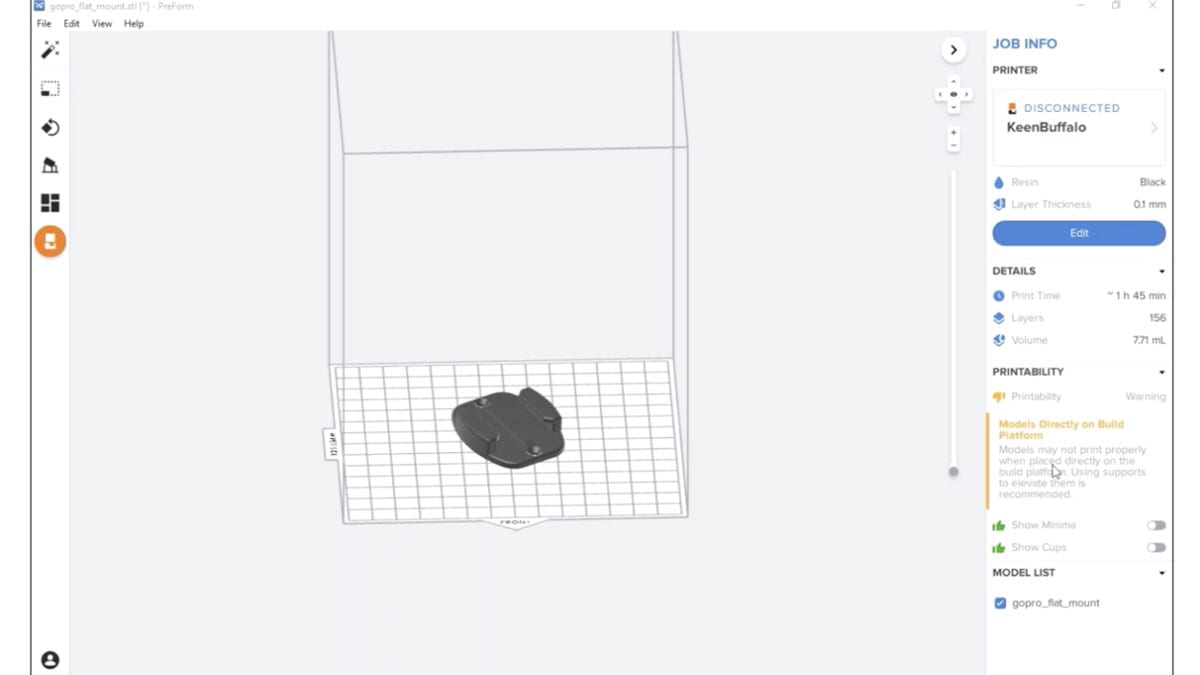
Step 1: Open file of model
Off to the left side, we have our Quick Access menu buttons and off to the right side, we have our status bar showing us the print time, how many layers are printing, the volume, printability of the model, etc.
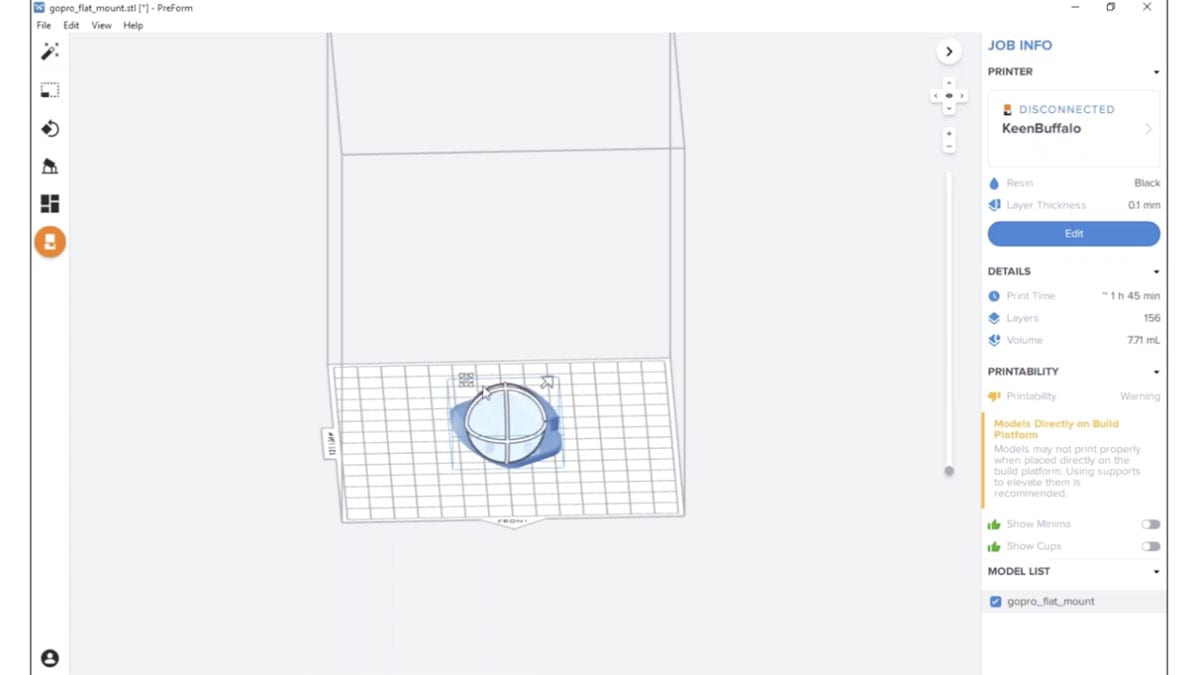
Step 2: Get familiar with the software
What we want to do when we get started is to make sure our model is set up how we want it to be. I want to make sure it’s oriented properly. So what I can do is click on it to select it, once it’s blue, it shows that it’s selected. I’m going to drag it to tilt the model.
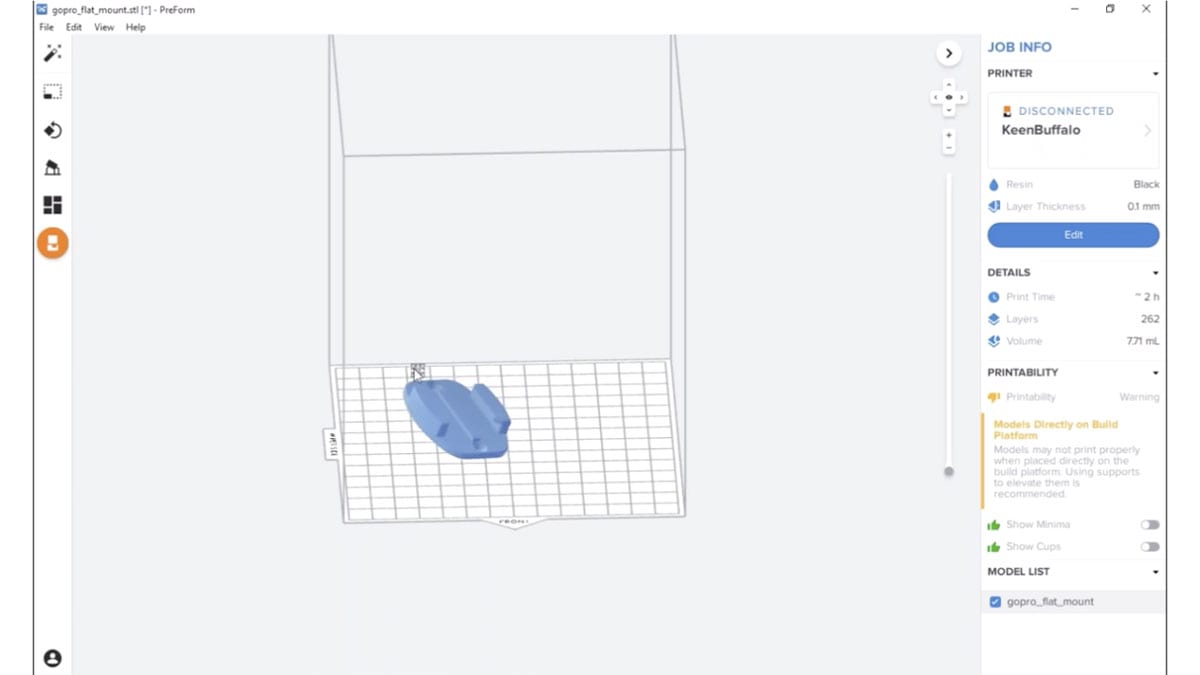
Step 3: Click on model to select (should appear blue)
You can even use the directional key to move it over to each side if you want to place more of the parts on the build platform.
With parts that have these larger, flat surface areas – you’ll want to tilt them at an angle of at least 10-20 degrees to improve your success rate for printing. Printing at an angle reduces the surface area of each layer which in turn creates less force on the part.
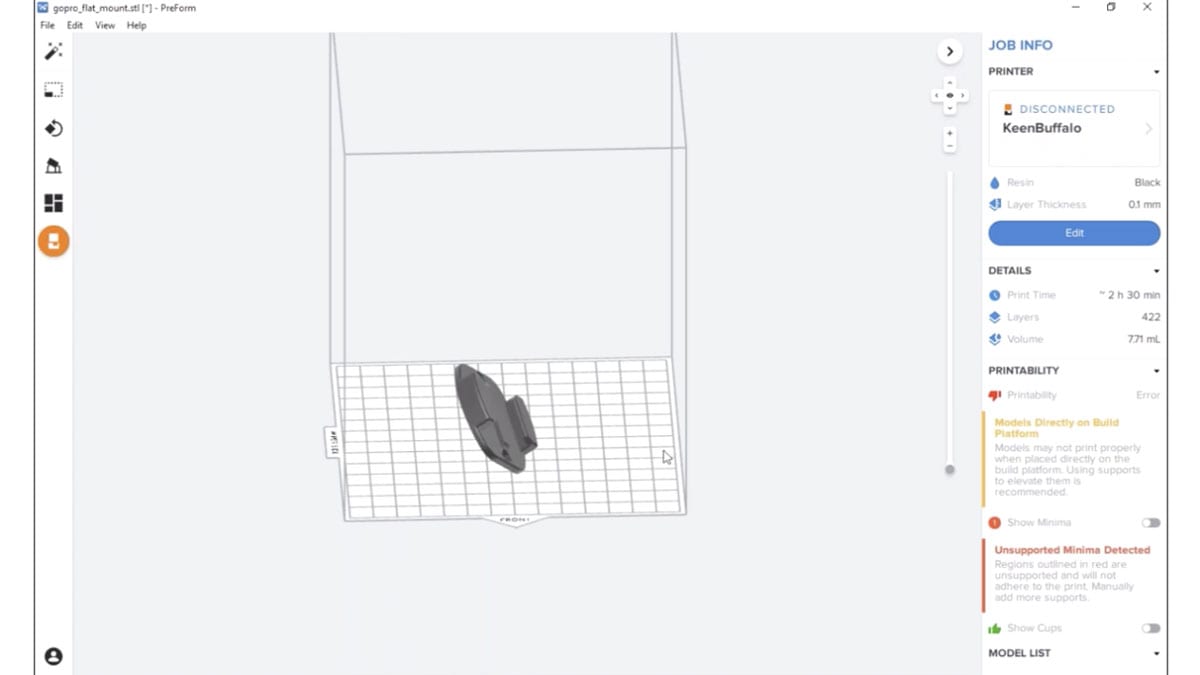
Step 4: Tilt model at an angle
Now that we have it oriented properly, we’ll want to create the supports. I’m going to go to the left side to the support button on the Quick Access menu – to generate all of them automatically. You can manually add them if you’d like. It only takes a minute to generate the supports for you.
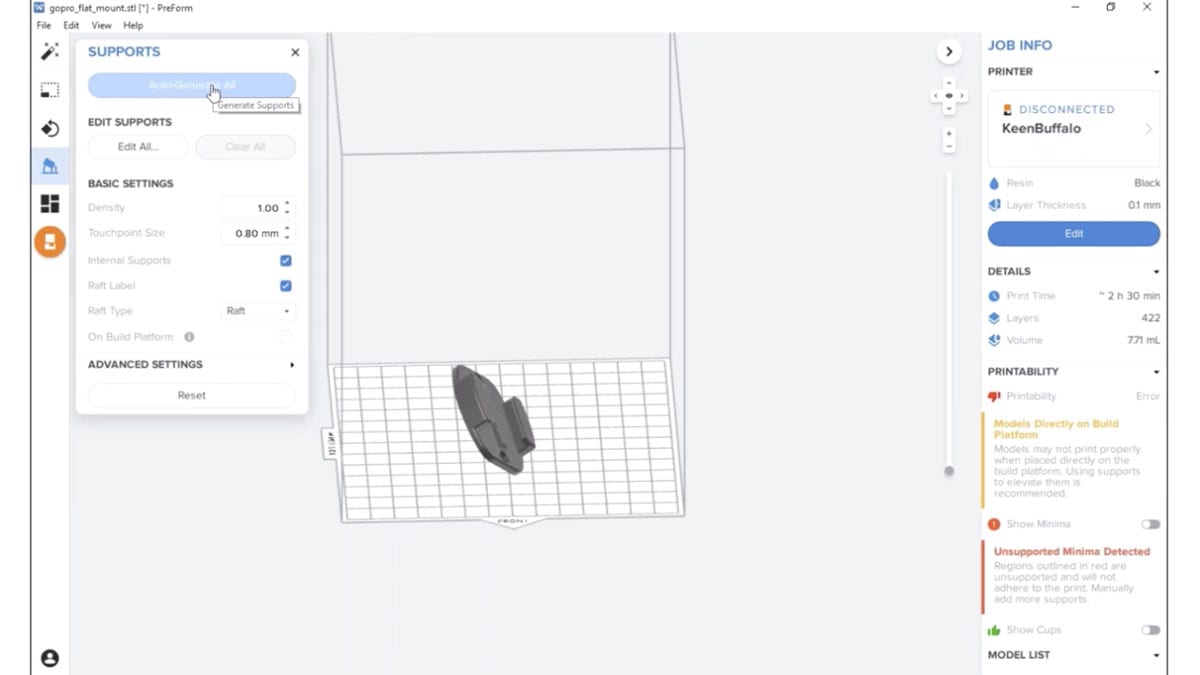
Step 5: Generate the supports for your model
Once the supports are generated, you’ll want to take a look at the model and make sure it’s set up the way you want it to be.
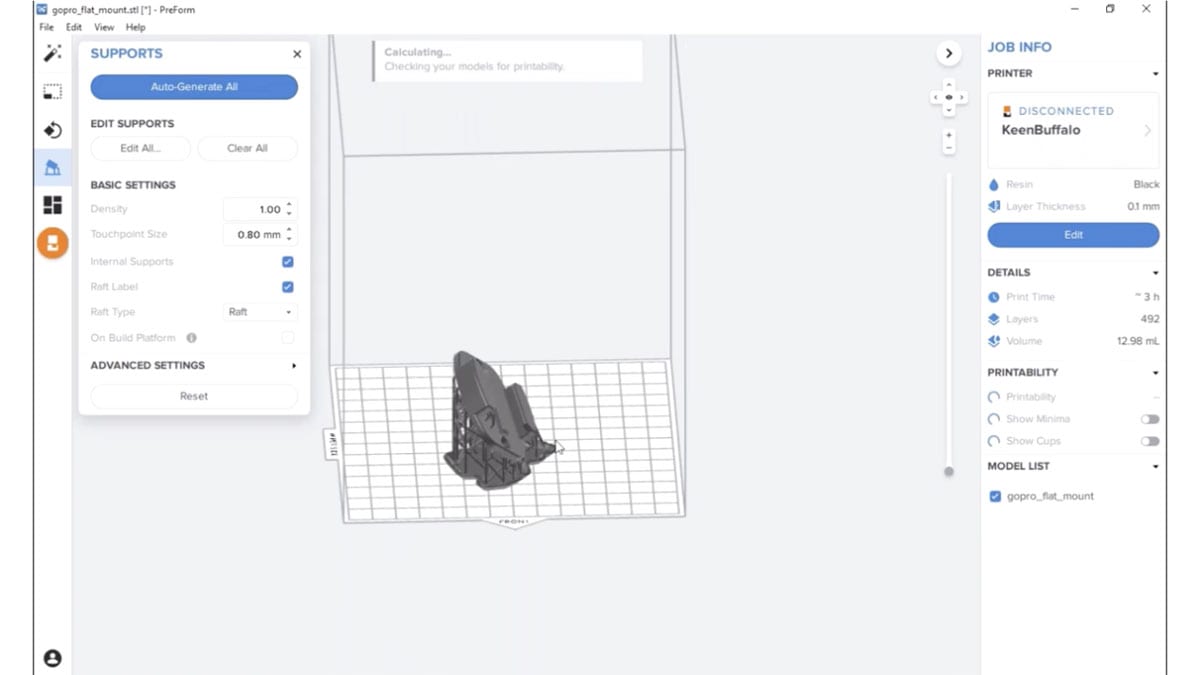
Step 6: Approve/Modify generated supports
Once you’re satisfied with the model, you’ll just click on your printer button on the left side where the Quick Access menu is, choose the desired printer, and then you upload the job to your 3D printer.
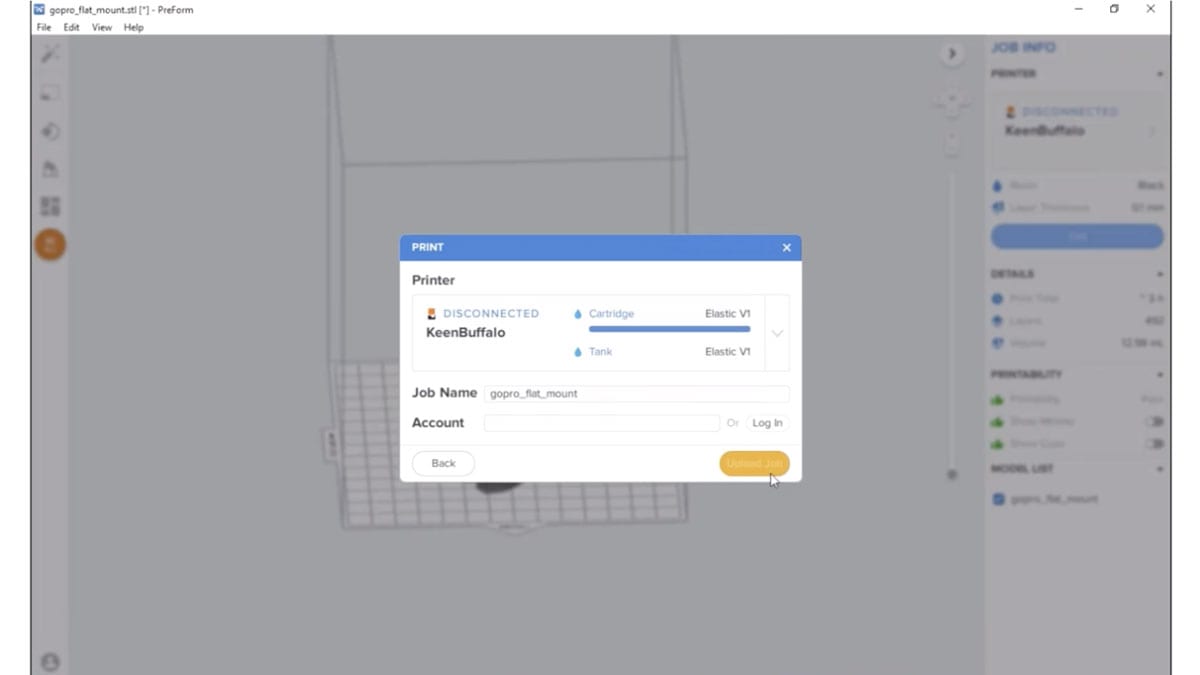
Step 7: Send model to printer
Interested in learning more about 3D printing on the shop floor?! Watch our free educational video on finding more opportunities for additive manufacturing.
PTC Creo Simulate gives design engineers early insight into product behavior to significantly improve product quality, decrease rework, and save money with fewer iterations in the design process.
Virnig Manufacturing needed to maintain a high level of quality in their skid steer loader attachments and was looking to increase operational efficiency and customer satisfaction. Darin Virnig and his team use PTC Creo Simulate to reduce costs, decrease weight, and eliminate reliance on physical prototypes – ultimately reducing design time by twenty-five percent.
Check out how Virnig Manufacturing uses PTC Creo Simulate to change the way they innovate in early design stages.
Business Initiatives
When it comes to skid steer attachments, it doesn’t get better than Virnig. Located in the heart of Central Minnesota, Virnig Manufacturing has been designing and producing skid steer loader attachments for over 27 years.
However massive they may seem now, Virnig wasn’t always the manufacturer we know today. When Dean and Lois Virnig got their start in 1989, the business operated out of a two-stall garage repairing farm and construction equipment. After five short years, the company discovered its niche – creating skid loader attachments.
Today, all steps of the manufacturing process are completed in-house. From engineering and cutting raw materials, to machining, welding, and painting the finished product, every attachment is designed and produced at Virnig’s facility.
Virnig now carries over 40,000 attachment parts and offers more than 80 unique skid loader attachments. Headquartered in Rice, MN, Virnig’s 67 employees have over 400 years of combined industry experience. The family owned and operated business has grown into a premium skid steer attachment manufacturer supplying North America and beyond.
Business Challenges
Virnig has been challenged more than ever to produce high quality, lightweight attachments in order to outperform the competition.
Darin Virnig, Manager of Production and Engineering explained, “We try as a company to get repeat business and to demonstrate to our customers that we have a solution for their problems. As our products continued to get more complex, they became heavy and overbuilt compared to our competitors. We knew we needed to lighten the machinery parts to reduce cost. As a company, we had to look to practices that gave us confidence in our processes before jumping into prototyping.”
Darin knew his team needed to maintain a high level of quality and also saw an opportunity to increase operational efficiency and customer satisfaction. To deliver on this goal, Virnig needed to provide employees across the organization with an in-depth view of how designs performed in real-world conditions.
This understanding would help Virnig reduce or eliminate product related issues in the field, lighten machinery parts, and reduce costly prototyping. By virtually testing real-world conditions, Virnig could maintain high-quality standards while optimizing and adjusting to their product lines.
Solutions – PTC Creo Simulate
Eager to reduce costs, decrease weight, and eliminate reliance on physical prototypes, Darin and his team turned to a PTC product called Creo Simulate. Because the engineers had used PTC Creo (formerly known as Pro/ENGINEER) as their primary CAD tool for several years, they felt it was only logical to turn to PTC’s Creo Simulate.
Creo Simulate is designed to provide users with accurate design simulation capabilities right within their CAD platform. By using the software’s simulation tools to create virtual prototypes, users are able to visualize and test a product’s structural performance before cutting any steel. This saves Virnig’s engineers time, energy, and money as they are designing new products.
Prior to implementing simulation software, Virnig tested product designs using trial and error or the build-and-break method. As products became more complex, the team realized the importance of accurate structural analysis. Virnig’s engineers found PTC’s integrated simulation tool easy to design, analyze and optimize the attachment lines.
Improving engineering design standards with early simulation
Virnig used Creo Simulate to innovate their most popular product, the Pick-up Broom. Traditionally the product consisted of a top with hydraulically driven bristles engineered to propel dirt into the bucket located on the bottom. With the Pick-up Broom, in particular, Virnig faced challenges as they attempted to lighten the machinery parts. To effectively analyze the deflection and strength of the product components, Virnig needed to test several design variations.
Using Creo Simulate, the team was able to virtually test multiple product designs in real-world conditions. At the touch of a finger, Virnig identified overbuilt areas on the Pick-up Broom. Their findings directly translated into lowered manufacturing costs, and lighter weight products that adhered to quality and manufacturing standards.

With the help of Creo Simulate, Virnig was able to reduce the Pick-up Broom cost by 5% without compromising quality. Creo Simulate also allowed Virnig to save 10% on labor and assembly time throughout the product development process by eliminating most of the expensive and time-consuming prototype manufacturing.
Darin explained, “We were able to resolve the problems we had with field issues as we got more comfortable with the software. We saw it replicate places that had problems showing us the high-stress areas and factors.”
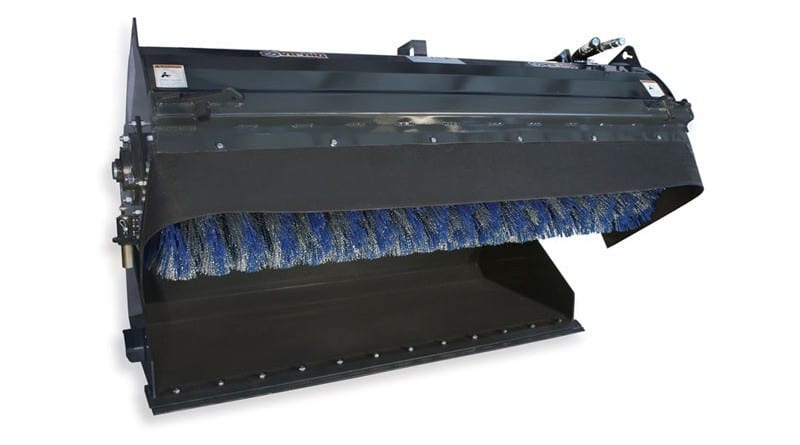
The benefits didn’t just stop there. This PTC simulation software allowed Virnig to use analysis early and often to verify and optimize the attachment product’s design integrity, function, performance, and cost. On average the company saved 25% on design time.
Darin stated, “We were able to finish the product faster, especially the structural parts that we manufacture by cutting and molding. Simulate on average has provided us a time savings of at least 25% because we don’t have to do as much trial and error on testing and prototyping.” Today, Virnig saves an average of 5 hours on every product they manufacture.
Darin explains what he considers the real value of Creo Simulate, “We have saved material, labor, and product while being confident that our quality hasn’t been compromised. Creo Simulate is saving us money and putting us at a competitive advantage – there is no doubt about that.”
By integrating the latest product development technologies and using top-of-the-line materials, Virnig continues to be a leader in the skid steer attachment industry.
Learn more about PTC Creo Simulate or contact us.
In today’s fast-paced manufacturing environment, agility, accuracy, and collaboration are more essential than ever. Windchill, PTC’s powerhouse Product Lifecycle Management (PLM) solution, delivers all three by providing secure, real-time access to product data across disciplines and locations. Companies stand to reduce costs, speed innovation, and enhance next generation products. PTC’s product lifecycle management (PLM) software, Windchill, lets you do just that. Designed to streamline product development from concept to service, Windchill empowers teams to work smarter, innovate faster, and maintain quality—no matter how complex the lifecycle. But let’s start by answering the basics first: what is windchill?
What is PTC Windchill?
PTC Windchill is a product lifecycle management (PLM) application suite that leverages a consolidated view of product information through multi-system data. It’s a systemic enterprise wide approach to maintaining product and process quality throughout the entire product lifecycle. Released by PTC in 1998, Windchill made its mark as one of the first internet-based PLM platforms. It has since become an industry staple across sectors (automotive, aerospace, electronics, medical devices, and more) supporting over a million users globally.
PTC Windchill PLM software provides a complete functionality dimension to help organizations capture product structures from computer-aided design tools, transform them into full engineering bill of materials (eBoMS), to manufacturing bill of materials (mBoMS), to service bill of materials (sBoMS) all while retaining the linkages between different perspectives on the product. Windchill solutions break down organizational barriers, allowing teams to work faster and more accurately all while reducing time-to-market and cutting costs.
Why Windchill Matters: Core Capabilities that Redefine PLM
When companies are juggling increasingly complex product designs, global supply chains, and regulatory demands, having the right PLM foundation is critical. Windchill provides the structure, visibility, and automation needed to handle this complexity without slowing innovation. Its core capabilities not only keep product data accurate and accessible but also empower teams to make faster, better decisions across the entire lifecycle.
Centralized, Secure Product Data Management
Windchill functions as a single source of truth (consolidating CAD files, BOMs, requirements, and supplier data) all housed in a scalable web architecture. Whether you’re working in engineering or collaborating with external partners, you’ll always have a current, secure view of product information.
Effortless BOM and Change Management
Windchill’s dynamic Bill of Materials (BOM) management enables inline editing, structural comparisons, and variant configuration for agile product planning. And with built-in Engineering Change Management (ECM) workflows, you can automate review processes, approvals, and compliance documentation to speed up time-to-market and reduce errors.
Workflow Automation and PLM Collaboration
With task and role-based apps, Windchill supports intuitive collaboration for both expert and casual users. From manufacturing to service teams, everyone can access relevant data through task-specific interfaces without over-customizing the system. This makes handoffs smoother and ensures alignment across functions.
Scalability and Deployment Flexibility
Whether deployed on-premises, in a private cloud, or via Windchill+ SaaS, the platform scales with your needs. Organizations benefit from streamlined upgrades, uptime, and strong compliance controls.
Elevating PLM: AI-Ready Product Development
Windchill isn’t just about data—it’s about intelligent data. By housing consistent, accessible product information, Windchill forms a foundation for AI-powered innovation. That means better decision-making, automated routine workflows, optimized resource use, and faster design improvements.
Key Benefits at a Glance
For many organizations, the true value of a PLM system comes down to the tangible benefits it delivers day-to-day. Windchill is designed to make collaboration easier, processes faster, and information more reliable, no matter how large or distributed your teams may be. By looking at its benefits side by side, it becomes clear how Windchill helps manufacturers overcome common product development roadblocks.
| Benefit | Why It Matters |
| Real-time Collaboration | Unified access enables cross-functional teams to deliver faster. |
| Data-Driven Quality | Reduced rework and improved product reliability. |
| Accelerated Delivery | Configurable workflows and automation streamline processes. |
| Agility & Resilience | Scalable deployments and open integrations help businesses adapt. |
| AI Readiness | Structured data enables machine learning for innovation. |
Core Windchill Capabilities
Beyond the big-picture advantages, Windchill delivers a deep set of tools that tackle the nuts and bolts of product lifecycle management. These capabilities are what allow engineering, manufacturing, and service teams to stay aligned—even when managing thousands of parts, configurations, or requirements. By exploring its core features, you can see how Windchill creates a connected, digital foundation for end-to-end product success.
Windchill’s robust feature stack supports even the most intricate development environments:
- BOM Management – Central views, variants, and CAD integrations
- Collaborative Product Development – Enterprise-wide visibility into planning, shop floor, service context
- Change & Configuration – Automated workflows, traceability, and compliance
- Manufacturing Process Management – Digital twin visualization, plant-specific BOMs, and digital quality tracking
- Parts Classification & Variability Management – Efficient search, sustainability handling, and product customization
- Product Data Management (PDM) – CAD data control, versioning, multi-CAD support
- Quality Management – CAPA, audit trails, regulatory oversight
- Supply Chain Collaboration – Real-time supplier workflows and transparency
Windchill also supports industry-specific packages—PDMLink, MPMLink, ProjectLink, Compliance, Cost, FRACAS, FMEA, and more—so your team can tailor the platform to its use case, from reliability analysis to technical documentation.
Example Use Case: Digital Thread with IoT Integration
PTC’s integration of Internet of Things (IoT) with Windchill closes the loop between product data and actual performance in the field. That enables real-time error reporting, role-based insights, and proactive maintenance or design improvements—putting reliability right in your development cycle.
What problems does Windchill solve for engineering and manufacturing teams?
Windchill addresses persistent issues like data silos, manual hand-offs, and version confusion by providing a single source of truth for product, CAD, BOM and change data. This unified platform helps engineering and manufacturing teams reduce errors, minimize rework, and accelerate time-to-market. By enabling concurrent workstreams and real-time visibility, Windchill supports efficient collaboration across disciplines.
Who uses Windchill and what industries benefit most from it?
Windchill is widely used by discrete manufacturing enterprises including automotive, aerospace & defense, industrial equipment, high-tech electronics and medical device companies. These industries benefit most because they deal with complex product structures, rigorous compliance requirements, and long lifecycles. In these areas Windchill excels. The solution supports both global, multi-site deployments and intricate configurations, making it a strong fit for manufacturers handling complexity and scale.
Is Windchill only for large enterprises, or can small-to-mid-size companies use it too?
While Windchill is known for enterprise-scale capabilities, its modular architecture and cloud delivery options make it accessible to small and mid-sized manufacturers as well. Smaller companies can leverage core functionality like product data management, version control and change workflows without the overhead of full enterprise deployment. As their needs grow, they can incrementally add modules and scale into broader PLM roles.
What are the main components or modules in Windchill?
Windchill consists of foundational modules such as product data vaulting, BOM & change management (PDMLink/PDMLink+), manufacturing process management (MPMLink), quality and compliance (QMS), service information management, and variant/configuration management. Additional modules include extensions for aerospace & defense data, risk & reliability analytics, and digital thread interoperability. These components allow organizations to tailor their PLM deployment to specific functional needs while leveraging a unified platform.
How does Windchill support digital transformation initiatives?
Windchill acts as the backbone of the “digital thread,” connecting engineering, manufacturing and service systems by enabling consistent, trusted product data across the lifecycle. It links to ERP, MES, CAD, IoT and analytics tools, enabling companies to move from isolated applications to integrated, data-driven workflows. By unlocking real-time visibility and enabling downstream usage of design data (such as in service or production), Windchill helps manufacturers transform operations and accelerate innovation.
What are the key features of PTC Windchill?
Key features of Windchill include a central data repository for CAD and business objects, automated workflows for change management, BOM management across engineering/manufacturing, variant/configuration support, role-based access and real-time collaboration. The platform also offers advanced visualization, reporting, document control and integration APIs for enterprise systems. These features combine to reduce errors, improve productivity and enable more agile product development.
How does Windchill improve collaboration across engineering and manufacturing teams?
Windchill enables cross-functional teams to access the same up-to-date product data, drawings, BOMs and workflows regardless of geographic or functional boundaries. With change notifications, task management and configurable role-based portals, manufacturing, sourcing, and service can work in parallel with engineering. This shared visibility and process alignment reduce delays, mis-communication and hand-off errors, enabling faster and more synchronized product delivery.
Does Windchill support document and version control?
Yes, Windchill provides comprehensive document management and version control capabilities, enabling controlled access, historical tracking, check-in/check-out workflows and secure archiving of product documents, CAD files, specifications and more. These capabilities ensure that all stakeholders are working from the correct version of data, audit trails are maintained and regulatory requirements around document governance are supported.
What security features does Windchill offer to protect product data?
Windchill includes role-based access controls, permissions model, encryption in transit and at rest, audit logging, and customizable security policies to protect sensitive product information and IP. Multi-site deployments are supported with secure federated architectures and authentication mechanisms (such as SSO and LDAP) to maintain governance across global teams. These features help ensure that only authorized users can view or modify data and all changes are tracked.
How does Windchill enable compliance and traceability in regulated industries?
Windchill provides traceable process management and audit-ready records of engineering changes, version histories, approvals, manufacturing effectivity and document revisions. Modules such as QMS and audit management support corrective and preventive actions (CAPA), non-conformance tracking and regulatory reporting. All of these outcomes are critical in industries like medical devices, aerospace or defense. By capturing who changed what, when and why, Windchill supports downstream compliance with standards such as ISO 9001, FDA 21 CFR Part 820 and AS 9100.
What APIs or data exchange capabilities are available in Windchill?
Windchill offers REST and SOAP web services, a comprehensive connector suite (ERP Connector, MES integration), configurable workflows, and open APIs to import/export data, integrate with enterprise systems and automate processes. These capabilities enable companies to connect Windchill with ERP, MES, IoT platforms and analytics tools. This ensures product data flows seamlessly across the enterprise ecosystem.
Getting Started with Windchill
Adopting a new PLM system can feel overwhelming, but Windchill is built with flexibility in mind. Whether your business is just beginning to formalize its processes or scaling globally, the platform can be tailored to fit your immediate needs while leaving room to grow. Getting started is about choosing the right deployment model, identifying quick wins, and building momentum for long-term digital transformation.
Here’s how you can begin:
- Define your deployment preference: on-prem, cloud, or hybrid.
- Identify key use cases: change management, BOM governance, quality processes.
- Engage implementation experts (like EAC) to configure, integrate, and train your team.
- Leverage SaaS tools like Windchill+ for faster time to value with built-in cloud benefits.
Next Steps with Windchill
So, what is Windchill? It’s much more than PLM. It’s the digital backbone that unifies product data, processes, and people across your organization. With modern deployment options, robust feature breadth, and readiness for AI, PTC Windchill equips manufacturers to innovate confidently, reduce cost, and accelerate delivery all while maintaining quality and control.
Looking to better understand how a PLM solution like Windchill can benefit your company? Check out The Manufacturer’s Guide to PLM Best Practices to learn more.
The Form Wash is designed for the Form 2 3D printer from Formlabs to automate the cleaning process between printing parts. It makes things much easier for engineers who don’t want to waste any time cleaning their prototypes so they can either use the Form 2 again for another print job or get back to their next project.
Washing printed parts before post-curing helps to remove excess residual resin from part surfaces and cavities. Formlabs suggests using isopropyl alcohol (IPA) as the solvent that is most compatible with washing.
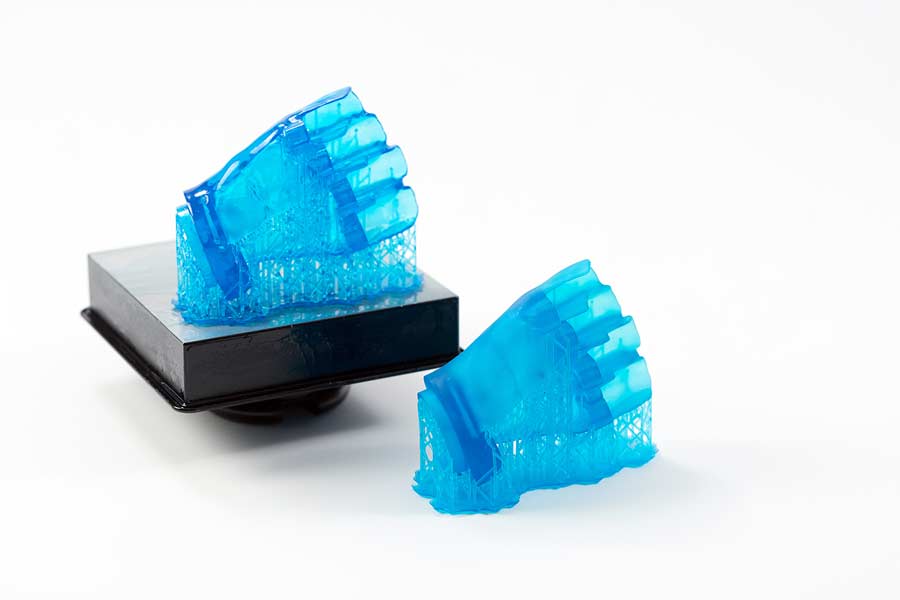
If you take a look at the image above, you can see that the left part is much cleaner and visually is more detailed than its counterpart. After using the Form Wash, you can typically use the Form Cure to expose printed parts to light and heat to stabilize the parts for performance. Using the Form Cure is not necessary but using the Form Wash and Form Cure together is recommended for optimal finishing.
Colder Products Company (CPC) has trusted EAC for years to provide them multiple Form 2 printers and other Formlabs equipment and materials to rapidly prototype customized quick disconnect couplings, fittings, and connectors for plastic tubing used around the globe. We answer a few questions that users have about the Form 2 and also include an engineer’s intake as well. Here is how Jeff Martin, an applications engineer at CPC, uses the Form Wash in-house to reduce time spent cleaning 3D printed parts.
How much time does it take for one wash?
Formlabs says that most resins require washing for the Form Wash default programmed time, which is 10 minutes – although additional time is needed for some resins. The following table shows Formlabs’ recommended wash times for each resin being used.
| Resin | Wash Time | Resin | Wash Time |
| Tough | 20 min | Elastic | 10 min + 10 min |
| Rigid | 15 min | Dental SG | 5 min |
| Grey Pro | 15 min | Dental LT Clear | 5 min |
| Castable | 10 min | Denture Teeth & Base | 10 min |
| Castable Wax | 10 min | Ceramic | 5 min |
| High Temp | 6 min | All other resins | 10 min |
Jeff suggests that you should set your wash time at 20 minutes for each wash. He also recommends that it’s best to physically have 2 Form Washes in-house to speed up the cleaning process, “The first Form Wash set to 10 minutes to wash parts hanging from the build platform, and the second Form Wash is used to clean the parts broken free from supports.” (Keep in mind, he typically uses Rigid Resin for his 3D prints).
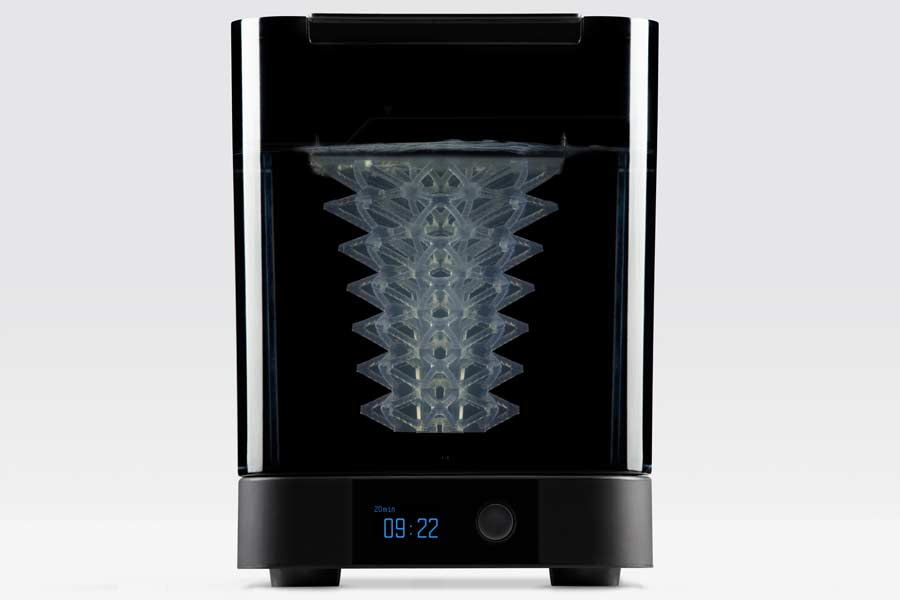
What’s the best way to wash prototypes?
If you’re using the Finishing Kit, Formlabs recommends that you should wash your prototypes in at least two standard wash tanks – the first wash, being the ‘dirty’ wash, would take 10 minutes and then the second wash, using a cleaner tank, for another 10 minutes. Once the first tank gets dirty, you can dispose the IPA, transfer the second tank into the first tank, and then pour new alcohol into the second tank.
The Finishing Kit includes 2 wash tubs to manually clean your 3D prints – whereas the Form Wash automatically cleans your parts and prototypes.
Jeff says the advantage of having a second Form Wash is that you can use Formlabs’ same theory of having a clean tank to do the final rinse. “I find it in my experience to be extremely useful to remove the supports for the second wash. The reason is that the supports block the fresh circulation of clean solvent from the parts. You will notice that for deep aspect bores and blind holes, if you do not remove the supports, they often times will not fully be cleaned of resin. After removing the supports and letting the parts bounce around in the basket during the last 10 minutes, they will always come out clean.”
If you’re interested in a free sample, then contact us at your earliest convenience.
Also, follow me on LinkedIn for tips and tricks on how to use the Form 2 and other equipment and materials from Formlabs!
Already know that you want to start dabbling in the Internet of Things (IoT) but have no idea where to begin? According to ARM, The Internet of Things Business Index, “A lack of IoT skills and knowledge among employees and management is viewed as the biggest obstacle to using the IoT more extensively.” EAC Product Development Solutions is offering the perfect way for you and your team to get started – with a hands-on IoT workshop.
This workshop, called the IoT Strategy Development Workshop, is pretty much what it sounds like…and it’s not just another class that delivers ideas of how the future is supposed to look. You actually get your hands dirty and work with your team to develop alignment between business initiatives, strategic frameworks, and vision statements. The workshop is 2 days and involves 4 different sessions including IoT Experience and Excitement, IoT Basics, Strategy Development, and a “Shark Tank” IoT pitch to peers.
Below you will find a transcript of a Q & A with Brian Ignaczak, Director of Research and Development at NORMA Group. Read about his team’s experience with EAC’s IoT Strategy Development Workshop. Contact us if you think this hands-on workshop would benefit you and your team.
NORMA Group develops AN IoT Strategy
Q: How did EAC’s IoT Strategy Development Workshop help you better understand IoT and how a smart connected product strategy could impact your business?
A: “The EAC IoT strategy development session showed us how we could add value through the use of data… it focused on the value-added business opportunity and helped us get over looking at just the gadget side of IoT.”
“I think the biggest takeaway we had from the EAC development session is that we were able to develop an IoT mission statement that aligned with our business initiatives. It brought together a number of stakeholders to put together an IoT plan that fit our organization. That has probably been the most durable product from our strategy session.”
Q: When did you realize the IoT could create more value for you and your customers?
A: “The EAC strategy development session helped us realize that IoT could be a big area of development for us. We want to be a technology leader. It fits with what we do. We want to stay on the cutting edge of technology and make sure that we don’t miss out on any revolution with respect to potential capabilities that we can add to our products. The session with EAC showed us many ways this could be possible.”
Q: In what ways did EAC’s strategy team help guide you to find your value drivers?
A: “EAC’s strategy team helped guide us to find our IoT value drivers through templates they had us work through. As we worked through the templates, we were able to see an underlining IoT strategy that suited our organization. These strategy templates forced us to fill in what we were really trying to accomplish with IoT.”
Q: How did your team define and prioritize potential smart connected product ideas?
A: “EAC helped us determine where exactly we were headed with IoT. We were able to thoroughly evaluate if we were trying to open up new markets or try and better serve our existing markets.”
“Looking at smart connected product ideas that our organization could pursue, we decided to focus on opportunities within our existing markets.”
“EAC helped us identify two main areas that smart connected products could fit our business model. The first had to do with addressing customer pain points through the creation of digital products. The second had to do with upcoming changes to the market that were coming via regulations. Their team really showed us smart connected products that could work as solutions for our organization.”
Q: What has been the biggest benefit of having a customized IoT plan to fit your company’s strategy?
A: “From EAC’s strategy development session we were able to determine an IoT framework that we now can discuss. It made our endpoint more concrete. We realized things we weren’t going to do versus things that were possible for us to do. They helped us identify how the revenue streams would flow based off of that.”
“EAC helped our company by setting a realistic IoT vision we are able to work towards.”
Q: What impact did EAC’s IoT processes have on your own strategy building sessions going forward?
A: “EAC helped us realize the importance of basing our IoT initiatives on our mission statement. The impacts of these processes remind us to continuously review that we are headed in the right direction.”
“The strategy sessions EAC held gave our company an anchoring point with IoT. Now, as new opportunities come up, we use the methodologies we were shown to develop products that will meet our vision.”
Q: Describe how EAC’s hands on connected product experiences provided a relatable IoT experience for you.
A: “EAC’s hands-on connected product experiences opened our eyes to the vast amount of data that can be produced. It made us realize how quickly data can be processed in real time. It showed us the vast quantity, the amount of processing power that is available, and how it could all be used to produce something of value.”
“Seeing live data stream on the computer screen and realizing how quickly that is communicated was pretty eye-opening.”
Q: How did the IoT Concepts presentation help frame a basic understanding of your current state and future opportunity that IoT provides?
A: “The IoT concepts presentation helped frame a basic understanding of our current state and future opportunity. It goes beyond technology and starts explaining how others have started to transform their business. The case studies really helped us to understand how some of our peers in the industry have begun to adapt to the changing technology and transform their business.”
Q: During the strategy development session, how did EAC help you realize the alignment between your business strategy framework and business statement?
A: “During the strategy development session, EAC had us break up into groups. We all developed plans and pitches based on an IoT implementation. From there, each group presented their idea to the wider audience. It was really interesting to see how different teams approached the opportunity. After the presentations, we had an open discussion as to what the pros and cons were of the different scenarios that were presented. We are currently moving forward with the winning concepts of those strategic plans.”
Q: Do you feel that EAC had the proper techniques, strategies, and knowledge behind IoT to help implement these new strategic initiatives?
A: “EAC absolutely had the proper techniques, strategies, and knowledge behind IoT to help implement our new strategic initiatives. They have been a very valuable partner for us throughout the process. They are the reason why we have been able to start moving forward with our development. We have made a lot of progress since then.”
Q: What might you say to other companies considering a strategy development session with the EAC specialists to develop or implement an IoT plan?
A: “I feel that EAC’s processes are a great way to jump-start IoT strategy development. Having an outside voice is a very important aspect of that. They come in with a different point of view and it really helped bring together the different viewpoints from our stakeholders and teams.”
“EAC’s processes definitely helped us push forward. (EAC) has been a really good partner in furthering what we’re trying to accomplish. For us, getting beyond just the technology side and really trying to build IoT into a business plan is one of the things that they have emphasized. They helped explore the best possibilities for us.”
“We have been more than happy with the engagement of EAC. We feel that they have a tactical view of how projects move forward. With IoT, there is a lot of uncertainty and there are many companies that don’t deal well with that. EAC helped guide us to explore and embrace the uncertainty of the emerging market.”
Is EAC’s IoT Strategy Development Workshop right for me?
Unpack the digital revolution within your company by developing an IoT strategy within your organization. NORMA Group found value in taking this 2-day hands-on workshop. Contact us to start your own IoT journey.
